Tag: mom guilt

  • The Grass Is Greener On The Filtered Side Of The Square

    The Grass Is Greener On The Filtered Side Of The Square

    We all do it… sometimes weekly…. usually daily… the mindless social media scroll. Our time to unplug without expectations or responsibilities. A safe, easy way to disconnect from our responsibilities and check in with those we know, and often times those we don’t. Except it is never that easy or safe. In fact, if we are not careful, it may be the most detrimental thing we do all day.

    “Social media was a place for witty, satirical comments; stylistic food pics; photos of beautiful homes and children; and birth announcements. It was a place to scroll through to get an idea of where you fared in the world, and figure out whether you were winning or losing at life.”

    The Family Next Door, Sally Hepworth

    Social media is a funny thing. We approach it as though it is an open door into people’s entire lives instead of a small window. We view, judge, and envy them based on what they post in little squares. I am guilty of this, as well. Getting caught up in what people post about themselves is so easy. Their accomplishments, their vacations, their bright and shiny lives. We see all the things they want to share and all the ways they want to show their lives to others.

    In the past, I have done the same on my own accounts. We want to showcase all the good things and memorialize them in the social media squares we post. We want others to see the good things about our lives. Those are the things we are comfortable sharing. There is no danger in that. And the truth is, as consumers of social media, I doubt the escape would be as fulfilling if our feeds were filled with negative or difficult topics. The state of the world right now is one of the reasons we turn to social media to “tune out” the noise – to go and see fun, light, uplifting content.

    Very few people want to air their grievances, dirty laundry, or hard days for the entire internet to see – and with good reason. There is no reason to invite people into every aspect of our lives and let them know all our struggles. There is no reason to post about the fight we had with our spouse about taking the garbage out or the way it takes double the allotted amount of time to leave the house in the morning. These are private moments that aren’t meant to see the light of day. They are events that are meant to be sorted out in private without a show to the world. However, when we intentionally leave those out of the equation, we present a filtered view of our lives. We present only half of the story.

    This is not to say that I think that everyone should post everything about their lives. Some things SHOULD remain private, and not open to the world. We do not have a responsibility to anyone other than ourselves. The purpose is not to share the ins and outs of everything that you do every day. We are not animals in social media cages for everyone else to ogle and point at. I have always wondered this about influencers, who often post so many aspects of their daily lives.
    There is a point at which posting about everything leaves little room to actually live your life. We have to be okay to live outside of the camera instead of through it. In an effort to video and photograph our moments and lives, we forget to truly live through them. This is not healthy either, nor does it set a good example for our children.

    However, I think that there needs to be a medium, both for creators and consumers of social media. Over the past couple of years, I have tried to be more candid about the struggles I am facing. I have used this blog as a vehicle to share many of those deeper, more honest thoughts. I have also tried to share more on my social media to present more. of a whole picture. There are still things I keep very private and have no interest in sharing with others. If you are in my inner circle, you are privy to that information, but it is not out for the world to see. And that is how I believe it should be. There is also still an element of fear about being judged by others that I m working through. This will never change, but I am beginning with being more open and honest with myself, and I am hopeful that the rest will come. It won’t ever change completely, but perhaps there will be a shift in that direction.

    As a consumer, it is more difficult in many ways. Understanding that people only post certain elements of their lives is easy to digest when you are in the mindset to do so. When you are in a positive headspace you can see social media for what it is – a snapshot into others’ lives covered in pretty filters and hashtags. It is a collection of what others want us to see. However, when you are feeling down, doubtful, or anxious, it is more difficult to see it for what it is.
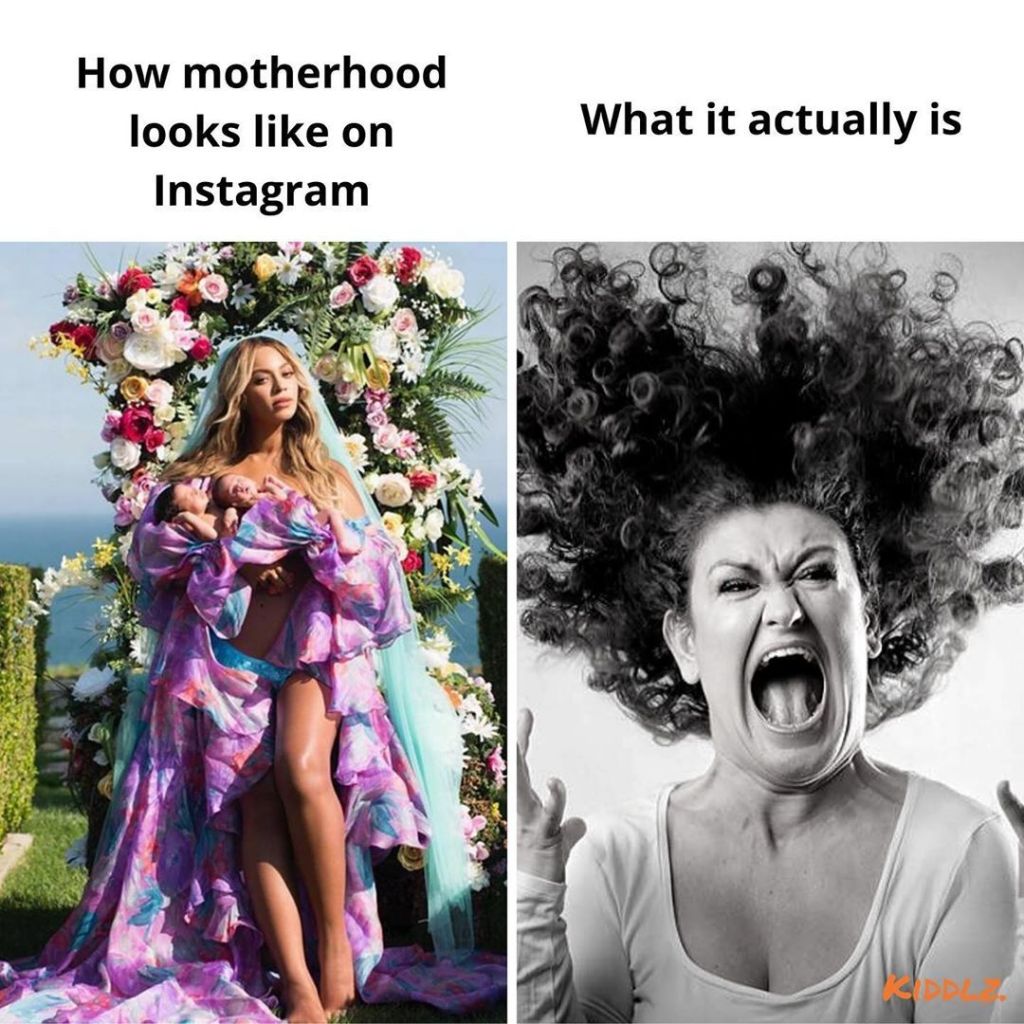
    We view it with green eyes and self-doubt. Why are they happy? How do they have everything together? Why are their children so perfect? How can I have what they have? We quickly forget that there is so much going on behind the scenes that aren’t shared because we are already feeling down on ourselves.

    I have had numerous conversations about this with my therapist, and how not to fall into that trap. She gave me the best advice on the matter – use the mute button. If they are not serving you, shelf them for a bit. It doesn’t mean that you have to delete those accounts indefinitely, but giving yourself a break from those who are not welcome in your season of life is liberating. I have been trying to change my algorithm by following and interacting with accounts that fill my bucket and my soul. Accounts that are more real, geared towards self-care and daily quotes that fuel my soul. I have also significantly decreased my time on social media in total. I know my sister goes as far as to put a 30-minute timer filter on her phone so it only lets her go on social media for a small period of time per day. She never comes close to that time, but even knowing it’s there is enough for her.

    I think, above all, I must close with this: like many topics in this blog, I write about things I am nowhere near perfect at. I share my thoughts because they are relevant to me, and I believe that opening the discussion is the best place to start. I do not share to be preachy or because I have everything together. This is so far from the case. I am struggling with this every day. So let’s try to normalize that what we see and show in our squares is only a piece of the puzzle. It is the view we want to give others. And there is nothing wrong with that AS LONG AS we take it for what it is – a filtered view of reality.

    This is life. Love, Mom.

  • The Best Form of Self-Care

    The Best Form of Self-Care

    So it’s been a minute since I’ve written. When I started this blog I had grand ideas about publishing once a week. It’s not that I don’t have enough to say, it’s that putting it down on paper has proven to be a trying task. There are times my mind feels like a washing machine, and all my thoughts are articles of clothing. They all mix together, unsorted, trying to get clean and organized. But instead, they just roll around in my head. Life has definitely gotten in the way and I have had to pause to take some time for myself. Taking care of my mental health is definitely harder to put into practice than just talking about it. It’s something I am a huge proponent of, and have written about before. However, as is always in life, talking about something and putting it into practice are two very different beasts. But… to be the best mother and woman I can be, I have to be a little bit selfish.

    Over the past little while. I have found myself having many conversations with people about therapy. It has made its way in countless times, not intentionally, but simply in the course of conversation. I have never been shy about speaking to a therapist, and I gladly share my experiences with others. I am a huge champion of therapy and the importance of both talk therapy and behaviour management skills (in the form of CBT and the like). I think this comes from my background in psychology, but also in seeing the results firsthand.

    I remember one time in the car, J had asked me about a therapy appointment. She wanted to know why I was seeing a therapist, In hindsight she actually got the terms therapist and chiropractor mixed up (ha!) but I didn’t know that at the time. I took the opportunity to explain to her how important therapy is and how wonderful it is for adults to seek support. I explained to her that just like kids need someone to talk to and problem-solve, adults need the same.

    It doesn’t go away just because you get older, even though children (and truth-be-told many adults) think it does. I told her that the strongest people in the world need therapy. And I truly meant it. I never want that therapy to be a bad word.

    All of this is why I’m here to say that therapy is one of the best forms of self-care. Far as someone who is perpetually anxious, talking through scenarios and potential issues is a great way to self-soothe. Even more so, using those opportunities to do inner work, speak to my inner self, and revisit previous traumas are all great ways to grow personally and psychologically. These are all things that cannot be accessed when we are in immediate crisis because they are less important at the time. However, they are just as important during growth periods.

    In the past, therapy has been viewed as something crazy people needed to do to get well, or that addicts needed to do in order to recover. It was mandated… necessary to become a better, more functioning member of society. But the truth is, we are complex beings. A lot is going on in our minds and the ability to resonate with our thoughts and be the strongest we can be mentally is so important.

    Being strong enough to say that we are working on ourselves is one of the best forms of self-care. Taking the time to be the best we can be, or even bitch and complain to an impartial party will allow us important clarity.

    One thing that I am working on is consistent appointments with my therapist, whether I am in crisis or not. Consistent doesn’t need to be weekly, but just at a regular interval. Although I am not ashamed to admit that my weekly therapy appointment is often the highlight of my week. I think that in many ways continuing therapy during those “downtimes” can be more powerful than when we feel we are in desperate need to speak to someone. I am guilty of this in a huge way. I let my therapy appointments lapse because I felt like I was in a good place. Then, the moment I felt like I was in crisis I was incredulous at the fact that my therapist couldn’t possibly drop everything and see me immediately. This is obviously completely unrealistic and a sure sign that I was in desperate need of therapy. But obviously, this is not the way the world works. And therapists don’t sit around like a crisis hotline waiting for you to meet them.

    It should be said, though, that although I am saying this with a bit of jest, there IS a crisis hotline should it be needed, and there is no shame in accessing it. In Canada, the Suicide Prevention Hotline is available at 1-833-456-4566. In Toronto (where I am based out-of) you can always call 905-408-HELP 24 hours/day. If you are EVER worried that you or someone close to you are in imminent danger of self-harm, please call 911.

    This is life (and we don’t ever have to go through it alone). Love, Mom.

  • I Love My Children, But….

    I Love My Children, But….

    It is no surprise that most of our friends and acquaintances are parents. It wasn’t really planned that way, but that’s how life turned out. A few days ago, Hubby and I were catching up with a friend. We were talking about having our kids returned to school and needing space from them for everyone’s benefit. He said something that stuck with me, as it truly reflected my own feelings. He said, “I LOVE my kids, but I want to LIKE them as well”. To me, this made a lot of sense. As parents, no one would doubt how much we love our kids. There is very little doubt about how much we would do for our kids, and what they mean to us. I would step in front of a train for my children. But sometimes, gosh, they are not very likable.

    It takes a lot to admit that there are times I need space from my kids. There is a lot of guilt and shame put on parents who think this – from society. Aren’t we supposed to love our kids unconditionally, aren’t we supposed to relish in every single moment and never want to be away from them? How could we ever fathom being apart?? When they were younger other moms would ask me about my thoughts on daycare. I would explain that I love my children, but I’m open to other people loving my children too.

    Because the time I spend with them should be positive. As much as possible I want to be able to enjoy our interactions. And truth be told, there are times when my judgement is clouded because I am so frustrated.

    Like many other parents, I have enough quips and one-liners to write a book. N, in particular, is full of them. He’s not saying them to be particularly sassy, but more in a matter-of-fact kind of way. He is our lawyer and will say whatever is on his mind – often times trying to argue his way out of things. For example, when I stated that I didn’t want to repeat myself again, he kindly pointed out that I “just did, so it’s too late”. Or when I told him I’m tired of asking him to do something he replied that perhaps I should “just go take a nap”. Looking back on those comments I can laugh because the truth is they are hilarious. However, at the moment they are definitely less than funny.

    Hubby has told me on numerous occasions I need to loosen up. He says that I am wound very tight when it comes to the children and that I can come across as being very short with them. This is a constant struggle for me, as I want to be the easy-going, laissez-faire kind of parent… but if you have read any of my previous posts you know that could not be further from the truth. The truth is that I need a break sometimes. Self-reflection and self-awareness have taught me that can be in the form of hiding in the pantry and counting to 10.

    I am lucky that the kids are old enough that they will be okay in those 10 seconds…. not like when they were toddlers and 10 seconds of silence meant mayhem was occurring in the other room.

    As I go through this post, I reflect on what the purpose is – what it is that I am trying to convey. Sometimes I feel like these topics are glorified brain-dumps. A string of consciousness tied together by a thin line. But the irony is that is probably the most reflective of a mom-brain. Twenty-five different tabs open and running simultaneously… but I digress. The truth is, that I am hoping to shed light on a stigma that has plagued us for far too long. The idea that our children are always full of rainbows and sunshine and that we shall love them and want to be around them every waking minute is fraught with mistruths. We can be great parents AND need space from our kids sometimes. These ideas are not mutually exclusive, even if we are led to believe that they are. Thinking so doesn’t make us bad parents – it makes us human.

    This is life. Love, Mom.

  • The Invisible Mother

    The Invisible Mother

    The other day, I was listening to a podcast about motherhood and mental health, and a discussion about the following quote by Glennon Doyle rocked me:

    “Mothers have martyred themselves in their children’s names since the beginning of time. We have lived as if she who disappears the most, loves the most. We have been conditioned to prove our love by slowly ceasing to exist.

    What a terrible burden for children to bear—to know that they are the reason their mother stopped living. What a terrible burden for our daughters to bear—to know that if they choose to become mothers, this will be their fate, too. Because if we show them that being a martyr is the highest form of love, that is what they will become. They will feel obligated to love as well as their mothers loved, after all. They will believe they have permission to live only as fully as their mothers allowed themselves to live.

    If we keep passing down the legacy of martyrdom to our daughters, with whom does it end? Which woman ever gets to live? And when does the death sentence begin? At the wedding altar? In the delivery room? Whose delivery room—our children’s or our own? When we call martyrdom love we teach our children that when love begins, life ends. This is why Jung suggested: There is no greater burden on a child than the unlived life of a parent.

    Glennon Doyle “Untamed”

    What struck me more than the quote itself was how controversial it was. The podcaster and her two guests had differing opinions on it. One understood why people might have an issue with the quote. Another was saddened by the fact that it was controversial in the first place. After the podcast finished, I read it over and over, trying to make sense of it. What was it that stuck with me? Resonated with me so viscerally?

    This isn’t the first time I have spoken about women and the role of motherhood. The impossible task of trying to be everything for everyone. I should clarify before I go any further, that I fully both recognize and appreciate that many fathers feel this in their role, as well. I know that the feeling of martyrdom for the sake of our children is not strictly reserved for mothers. However, society has engineered a situation where mothers are the most at risk. The first part of the quote is the one that makes me the saddest. The idea that we are teaching that when “love begins, life ends” is one that is hard to grapple with. It isn’t to say that being a mother isn’t important, or that your life had changed for the better when it happens because that is true. But there is a societal expectation that the two cannot happen in unison. Somehow we have equated the level of sacrifice with the level of love. Somehow as a society, we feel that mothers who give up more of themselves are those who love their children more. If this is true, working mothers are at an immediate disadvantage by doing something that isn’t directly linked to their children.

    One thing is clear – how we live and make decisions most definitely rubs off on our children. Our actions show our daughters how they should (and shouldn’t) behave once they are mothers. It shows our sons what to expect of the mothers of their children. (Again, a caveat: I am talking on a visceral level about the roles of mothers, and am not meaning to disregard other forms of families). One thing I love to do with J is put together furniture. She has become quite adept at it, even putting together items on her own. If you ask her my thoughts on it, she will repeat my sentiments which are that society believes women need to ask men for help to do things like that, but she won’t need to ask anyone for help because she will be able to do things for herself. It brings me so much joy to hear her say that – to know that she can relish in her independence.

    As a society, we are getting better at telling women that they can do things on their own. That being a woman should not stifle her. Being a wife does not have to define her. And being a mother does not have to limit her. And yet, there continues to be an indignity associated with women who want more than just motherhood or want to also define themselves by their careers and/or passion projects. It is as though doing so will make them less of a mother.

    There is an unspoken shame that many women feel when they cannot be everything in every situation. You cannot give 100% to your children and 100% to your career simultaneously. It is physically, mentally, and mathematically impossible. And yet, I sit here wondering why do we not hear the term “working father”? Why is this definition solely reserved for women? Again, because women are set up to make impossible decisions. One that we have made to be synonymous with how much we love our children. One that is meant to pit our own self-identity against that of our identity that is tied into others – being a wife, being a mother, or being an employee.

    What is the most difficult about all of this, is how hard it is to change. We can begin to have these discussions for ourselves, but breaking down years and years of society’s norms and beliefs is much easier said than done. This is not an overnight turnaround. We are stuck on this hamster wheel… spinning and spinning….. The only solution is as far as I see it, is a long-term one where we teach our sons and daughters that they can do better. We teach our daughters to be defined by the roles THEY create, and not by one single event or experience. We need to do better for them.

    This is life. Love, Mom.

  • I Am Slowly Going Crazy….

    I Am Slowly Going Crazy….

    I remember as a kid singing this Sharon, Lois, and Bram song over and over. At the time, this song about slowly going crazy and losing your mind was on repeat in my house. Not because I felt crazy but because it was fun to laugh about losing your mind. Oh, to be a child of the 80s again…

    Somewhere along the line, something switched. It wasn’t that I moved from counting forwards to backwards as the song goes, but more so that my mindset changed. As an adult in an environment where talking about mental health is more common, the idea of slowly going crazy has taken on a brand new meaning. I know there are times when we all feel like we’re a little crazy. The word itself is fraught with negative connotations. Being called crazy implies a lack of control, and an inability to regulate. And yet, there is this incredible juxtaposition happening. It has become more socially acceptable to talk about your feelings and inability to cope 100% of the time. More and more, we see campaigns, social media posts, and books all about self-care and the importance of mental health. I am grateful for the increasing openness around this topic. When we think of mental health struggles, we think less about a person chained in a psych ward and more about a regular human.

    I am here to continue the discussion and be as open and honest about my own struggles, in hopes that it opens the door for someone else. I have always been somewhat of an anxious person, striving for perfection academically. I don’t know whether I was able to manage it better when I was younger or the stressors were simply smaller, but it was never really an issue. It was just a way of life. As an adult, and more so as a mother, I felt my anxiety spin further out of control. Again, I felt that I was able to manage it. Maybe I was, or maybe I wasn’t. I will never know if it wasn’t as difficult for me or it was less socially acceptable to discuss. What I do know, is I was definitely not as aware of the importance of my mental health as I am now.

    The irony of all this, of course, is that my own undergraduate degree is in psychology. I loved learning about how the brain works in the university and in particular adored my abnormal psychology classes. At one time thinking I might pursue a career in school psychology, how the brain works fascinated me. How we deal with trauma, conflict, and aversion was my main focus in school. But there is there a reason they say doctors make the worst patients. Not to say that I am a doctor, but the analogy still rings true.

    I have a distinct memory of a few years back when I knew I was out of control. I can feel it like it was yesterday, although I couldn’t tell you the specific dates. I can close my eyes and I am back in that place. I had been experiencing panic attacks, and for the most part, I was able to keep it to myself. I knew that something wasn’t right but I tried to power through it. One day, I was driving and had a panic attack so severe I had to pull over. It scared me because it was the first time I felt truly out of control. I was by myself in the car but could only think about what might happen if I wasn’t. I sat in the parking lot as my hands and feet tingled from my shallow breathing and knew I needed help. I went to see my doctor the next day and a combination of medications and therapy ensued. Neither could work independently, they needed to work in tandem with one another.

    Today things are better but I am most certainly a work in progress. If I can take anything from this journey, it is that it is a marathon not a sprint… but all without a finish line. I have days where I feel incredibly in control. I feel like a superhero who can handle anything thrown at me. Other days, I feel triggered by the smallest thing. I can feel the tightness in my chest and the clenching of my fists.

    Having a support system, as cliche as it sounds, is integral. There is something very normalizing and reassuring about being open about your struggles. Our failsafe is to reject what we don’t understand or make us uncomfortable, or to humourize it. Even now I often refer to my medication as my “anti-crazy pills”. I know that isn’t what they are, but for some reason making light of the situation makes it feel more manageable.

    And this is what I have come to terms with – the new normal. It the normal that things don’t have to be perfect. The normal that mental health needs to take priority. The normal that needing help and asking for it doesn’t make you weak – it actually makes you stronger. And the normal that keeping things inside is as unhealthy as any other physical ailment.

    This is life. Love, mom.

  • How To Become A Pinterest Mom

    How To Become A Pinterest Mom

    The idea of a Pinterest mom is simple, really. You spend your free time making Halloween costumes, organizing your home with countless woven baskets, baking healthy meals from scratch and making school lunches filled with cucumbers shaped like flowers and sandwiches shaped like zoo animals. No outing is too small for full makeup and polished hair. You have everything together, and show off your impeccable fashion sense in perfectly curated social media posts. You make weekly trips to your local craft store to stock up on DIY projects you will do with your kids. This is the 21st-century reincarnation of an idea that has been around since the beginning of time.

    There are so many women who wish their lives looked more like a page out of a magazine (or social media square). They want their home to be impeccable, all facets of life to be perfect, and be able to do it all (and do it all perfectly). I’m here today to spill the secret of how to evolve into this ethereal being. So want to know how? Step 1: It will not happen 100% of the time. Step 2: Find a new dream.

    If this all sounds ridiculous, we can now be friends. The truth is, we may (or may not) have elements of this in all of us. We might be good at one aspect of our lives and struggling in others. To some extent, this insanity goes both ways. I know women who are amazing at certain things but get embarrassed when it is pointed out. Instead of celebrating our accomplishments, we minimize them to avoid feeling boastful or braggy. This shouldn’t be the case either! I have friends who sew their children’s Halloween costumes from scratch. I have friends to make their own snacks. I, myself try and bake when I can. But I also have friends who run out on October 30 to find a Halloween costume for their kids and those who stock up on snacks when there’s a sale at Walmart. Does one or the other make them bad mothers? Absolutely not! Each judge themselves for what they canning can’t do? Probably to some extent.

    Truly, though, why do we do this to ourselves? Why do we put so many unrealistic expectations on ourselves, and then feel awful when we don’t live up to them? In theory, we should be happy with our lives and not worry about what others think. But everyone knows that is not actually true. It is so much easier said than done to brush things off and say that we don’t care. Now let me be clear, I do know that some people genuinely don’t care and more power to them. But these women are the unicorns of our society.

    So why is the judgement of others so important to us? Why is our happiness affected by how others perceive our accomplishments, and how effectively we have our shit together? As the “judger”, it is a bit easier to explain. The psychology behind this is that we judge one another because we have inadequacies in ourselves. Those who judge others’ decisions are projecting their feelings onto others.

    And I can see how this is true, but what does it say about how we judge ourselves? What does it say about how we worry that we will be judged by others? The thinking is a defence mechanism of sorts. We plan for what others might think so we can know how to react. Or we judge ourselves first before anyone else gets a chance to. But why can’t we just be confident and have THAT be projected onto others? Tell anyone who thinks otherwise where they can go….? There is a saying that we are our own worst critics, and this fits well here.

    I have come to terms with the fact that I am not perfect. There are areas that I want to improve, for sure. But there is no way I can be everything to everyone. It is just mathematically impossible to give 100% in more than one place. My house will never be spotless (unless I’ve just finished a rage-cleaning binge). My kids will eat pre-packaged snacks. My life will not look like a Pinterest board.

    Most days, I am okay with this. I focus on the positives and what I AM able to accomplish on that day. I shrug off my own insecurities and try not to be bothered by others. But other days are darker. I look at others’ social media through green eyes. I am jealous of those who can do more, do better, accomplish things I cannot. I judge myself before others can “get to me”. It creeps into my dreams and wakes me up at night. I have been told by others that I am rather outspoken, sometimes without a filter. That I can share my thoughts with others and I am not afraid of judgement. I can put on a tough shell, and pretend I am invincible. But in reality that is just not the case. What we see is rarely what we get. And I think THAT is the point. I would like to imagine that even “Pinterest moms” have those insecure days. Because it will never be enough and no one will ever truly have it all together, even if it looks that way through our lens. The sooner we realize this, the happier we probably will be.

    Social Comparison Theory proposes that we determine our worth by comparing ourselves to others. In fact according to Psychology Today, as much as 10% of our thoughts are comparison in nature. Did that surprise you? There are days when I feel like it’s more… The point is that no one is immune to this struggle and we are all fighting it in our own way. So what is the answer? Just like the secret to becoming the perfect mom – there isn’t one. It is human nature to judge ourselves and compare ourselves to others. That can be a motivator or a deterrent – do we want to use it to push ourselves out of our comfort zone and try something new, or is it worth it to bother? I think that happiness lies not in trying to ignore these comparisons or brush them aside, but in harnessing them and using them to motivate us to be better. To try something new, cook a new dish, read a new book, or redecorate with a new rug – not perfect (because nothing should be), but better.

    This is not to say that this is working for me, and I can tell you that it will definitely be easier to adopt this mindset on good days over the darker ones. But, I will give it a try.

    This is life. Love, Mom.
  • On Wednesdays We Wear Pink

    On Wednesdays We Wear Pink

    Once upon a time, there was a movie about a girl who was homeschooled, trying to fit into the jungle that is high school. If you are familiar with the title of this blog, it’s surely because you have watched (and probably rewatched) the movie “Mean Girls”. There is a reason the movie resonated with so many. Even though it was released in 2004, it feels like it could have been yesterday. The story is not a new one, it is about the trials and tribulations of high school and how to get along when you feel lost socially. It’s about how to stand up for yourself, and if your social status is determined by the “in” crowd. It isn’t the first of its kind, and it is definitely not the last. We all have our social horror stories from our time in school. No one left those years unscathed in some way, shape, or form. The truth is, the movie truly struck a chord with so many girls because we could see ourselves in one of the characters.

    In speaking with friends, it is apparent that these social situations are happening at an earlier and earlier age. This is especially true of those who have girls. It used to be that “mean girls” and the like were reserved for high school. Finding your place in the world, in society, and social circles comes to a head around that time. However, social difficulties between girls, in particular, are happening at a younger and younger age. I have countless stories of difficulties between my grade 4 students over the years. These are situations where girls are purposely and maliciously mean, unkind, and exclusionary – things that you wouldn’t necessarily expect of 9- and 10-year-olds.

    Before I go on, I want to make an important point. I don’t want to perpetuate the stereotype that girls are the only ones who deal with social difficulties. I know that with the rise of social media, emotional and social-based bullying is prevalent across all genders. I, however, it should be said that typically boys deal with disagreements in more of a physical manner whereas girls attack each other emotionally and socially. This is obviously not true for everyone but it is historically the pattern.

    Going through middle school and high school I can recall several situations that would be categorized as “mean girl activity“. I remember the rise of three-way calling in the 90s as the weapon of choice for many girls. Two girls would collude to call a third without her knowing that someone was listening on the line. The first girl would get the other to say something mean about the third without her knowing that she was listening. What pursued was a barrage of attacks, as the “truth came out”. Admittedly, I was both the perpetrator and victim of this behaviour. It got to the point that girls would become paranoid whenever they received a phone call, asking numerous times if anyone else was listening on the line. Sabotaging each other socially is the number one way girls get at each other. And truth be told, there was no rhyme or reason behind it. It was simply to play off each other and test the boundaries of what we could get away with. Girls attack and play on anxieties of being alone or becoming a social pariah.

    “You know that I’m not allowed to wear hoop earrings, right? Yeah, two years ago she told me hoops earrings were her thing, and I wasn’t allowed to wear them anymore. And then for Hanukkah my parents got this pair of really expensive white gold hoops and I had to pretend like I didn’t even like them. It was so sad.”

     Gretchen Wieners (Mean Girls)

    I was well into my teens when I began to truly understand the notion of quantity over quality when it came to friendships. This is a lesson that needs to be learned not to be taught and sometimes it’s a difficult one to stomach. Understanding that true friends are those who will truly be with you through thick and thin comes with the territory of going through those trials. Some of my best friends are those who I have known since elementary school because those bonds have stood the test of time.

    As a mother of a young girl, I struggle with this immensely. I am proud to say that she is well-adjusted socially and typically well-liked by her peers. Up until this point, Hubby and I have done all of the managings of friendships – organizing play dates, birthday parties, zoom calls, etc. Now that she is older, she has significantly more autonomy over who she interacts with. Gone are the days when you should be friends with everyone in your class simply because you share a space with them. Yes, you must respect each other but you don’t necessarily have to form strong bonds. A few weeks ago, she came home to tell me she had planned a play date with her friends. She informed me of the time and day and all I had to do was take her there. This was the first time she had organized something on her own and I was happy to oblige.

    It is not all rainbows and sunshine though. And this is where I truly struggle. There are, of course, girls she is friends with whom I would not choose for her. Let me be frank and say I disagree with how they are brought up and how they interact in social situations. I worry that she may be influenced to try the things these girls do, even if just to see what it is like. I will say that this is a whole other can of worms for me to open up on another day. There are also girls with whom she does not get along. Not for any other reason that these girls lack social graces and verbal filters. It takes everything in me to not get involved when she tells me that girls in her class have said rude things to her. She lets these comments roll off her back, and sometimes has a witty retort for the other girl. I know what it is like to be on the receiving end of these things and I want to protect her with all my heart. I also know that these are paths she has to travel through on her own. With my map ideally, but without me in the driver’s seat.

    So how, as a mom, do you reconcile having your child do things on their own and wanting to protect them at all costs? How do you find the balance between knowing how kids can be and letting them forge their own path? All I want for her is to be a strong, confident girl. And she is, but I don’t want her to lose that at the hands of a peer. Knowing how girls can be, and knowing how mean they are to one another, how do I arm her with the social wherewithal to stand up for herself and not let things take up space in her head? Really, at the end of the day, all we can do is teach our girls to be strong-willed, strong-minded, and thick-skinned. We can build them up before others tear them down. We can give them the language to speak up and talk back. And we can pray that the Regina George’s of the world don’t get into their heads. Otherwise one day mama-bear is going to come out swingin’.

    This is life. Love, Mom.

  • Where Did I Land My Helicopter?

    Where Did I Land My Helicopter?

    As cliche as it sounds, there is nothing harder, yet more fulfilling than being a parent. There are so many times I pinch myself, wondering who gave me the responsibility of raising children. Not that I’m not capable, but to some extent we were children, and now we are responsible for our own children. So many parents lament “if only there were a handbook…..” or wonder if they can google “how to raise my kids”. It can be hard to find yourself in the ebb and flow of parenting. Not to mention, what is good for one child is rarely the same for the next. There needs to be a balance between being the “helicopter” parent and letting our children just figure things out on their own. Neither at its extreme is helpful or rational, but it isn’t easy to find that middle ground. There is nothing we want more than to keep our kids safe, and to have them become good humans…. but how we get there is a bit of a mystery. We know the final destination, but the roadmap is nowhere to be found.

    No one would argue that being a helicopter parent is a good idea, for both the parent and the child. In case you are not familiar with this term, a helicopter parent does not let their child out of their sight. The constant micromanaging, worrying, hovering over your child, and keeping them close is not ideal. The fear is that they will be hurt, or put in a dangerous situation. So the antidote is to ensure that you are constantly there to protect them. However, in doing so it leaves little room to allow them to make mistakes.

    It also makes transitions to school and programs quite difficult (usually more so for the parent than the child). As much as we want, we cannot go through life holding their hands, or encasing them in bubble wrap.

    And to be clear, the opposite is no better. The idea that children should simply learn by experiencing life, and from their mistakes is fraught with issues, as well. Yes, children should learn life lessons, and get the bumps and scrapes that come with growing up. As a teacher, I can appreciate that learning certain skills on your own is much more valuable than having them explained to you. Coming to understand the world through natural consequences is indeed important. Working through experiences, building resilience, and figuring out right from wrong are all invaluable lessons. But, by being completely hands-off, children lose the attachment to parental figures that is so important. And the question is – are we putting them in unnecessary situations? Are they learning lessons they shouldn’t need to learn? The argument becomes if we CAN protect them, why shouldn’t we?

    With all this back and forth swirling around in our heads, and the whispers of every parenting expert in our ear, what is the answer? What path will yield the best result? All we know is we want our children to be the best they can be; to grow up to be good, self-sufficient, kind human beings. As mothers, there is an inherent fear that we are constantly messing up our kids. I myself am guilty of this, as well. Decisions are met with self-doubt, questioning, and rationalization. Should I have let them do their own thing? Did I not step up enough? Was the best decision made for the situation? These questions are coupled with the nagging notion that each decision holds more weight than it truly does. As if we are one decision away from permanently messing up our children. Of course, in hindsight, this is rarely the case, but it doesn’t feel like that at the time.

    Interestingly, before I had children I often thought I would be more relaxed (I mean, didn’t we all??). I didn’t think I would be so worried all the time – specifically about the kids hurting themselves or becoming ill. And yet, here I am. I want them to be good, do good, and feel good. I want them to stand up for themselves and be respectful. I want them to be safe and secure. But I struggle with how best to execute this. I have had my “helicopter” moments, and let me tell you there are more of them than I’d really care to admit. The idea of them falling (either proverbially or physically) and not being there to catch them is daunting. I know that this feeling was heightened when J became very ill and was hospitalized at 2 years of age. I won’t get into it now, but I will in future posts. There is a delicate balance between keeping them safe and allowing them the opportunity to learn on their own, and admittedly I don’t know the formula.

    So can you imagine what happens when you throw Covid into the mix? The mystery that has plagued communities for the better part of two years has sent us all into hyperdrive trying to protect our children. Teaching them to wear masks, sanitize their hands, sneeze into their elbows, and inform adults when the sniffles are “just allergies” (when they truly are, of course!) has taken over our lives. We are left with the question, how can we protect our children if we haven’t yet figured out how to protect ourselves? Yes, we are making headway, but there is still a ways to go. Now let’s be clear – I am not using this platform to delve into the vaccine or mask debate. There is too much there to unpack, and I don’t think a one-off blog post is a place to do it. But, of course, these are other questions that are constantly top-of-mind. The whole situation would send any sane parent into overdrive, wondering how best to ensure their child’s safety.

    These are thoughts that continue to plague me, especially since September is already here. Maybe that’s part of the balance I struggle to find as a parent. What I DO know is that Covid has hit those who question their parenting, who don’t want to hover but cannot bear to look away… This is not to say that we have all had our own struggles because of this pandemic. But as we enter another school year, I know that the parents I talk to are all worried about the same thing – how can we keep them safe when we can’t see them all day? How do we keep them healthy when we have no control over the environment they are in? There is an element of letting go that is involved in sending our children off to school that is difficult to grasp – even for parents who are more hands-off than the rest.

    If I’m being candid and honest, I’m not entirely sure what I want to impart in this post. I began writing this because I wanted to grapple with my babies returning to school, and the extra layer that Covid has added. Having been home last year altogether, sending them out into the world again is frightening. I want them to have the most normal of experience in what is the most abnormal of circumstances. All the while, I want to keep them safe. So when I find my helicopter, we can all jump in together and hover over our children. At least for the near future until we can see the light at the end of this very dark tunnel.

    But this is life. Love, Mom

  • Excuse Me While I Step Off My High Horse

    Excuse Me While I Step Off My High Horse

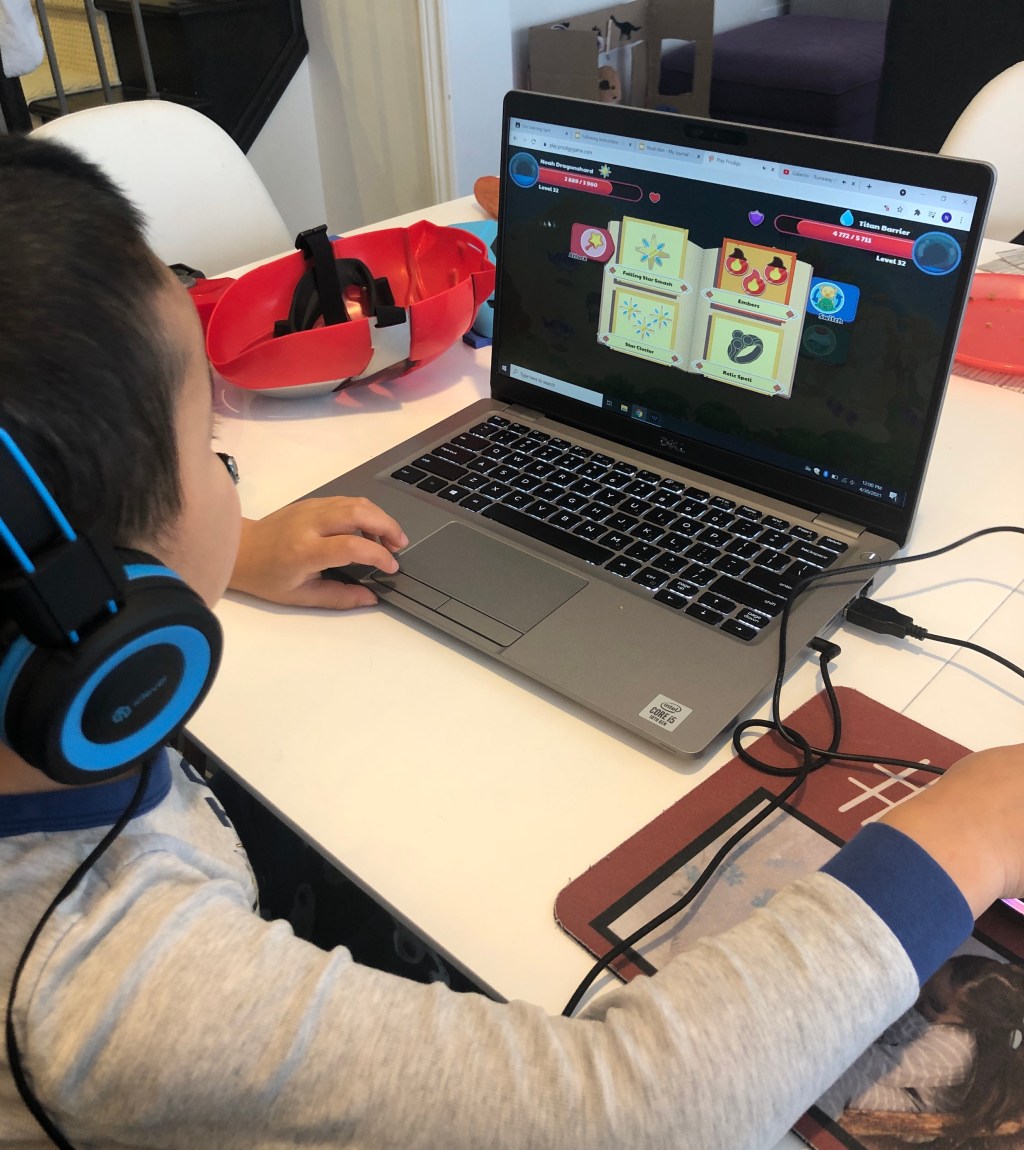
    When J was a baby, Hubby and I took a family trip to Florida. On our first night there, we went to a restaurant with my parents. After a few moments, a couple walked in with their three children. Each child was holding their own device and proceeded to play on them while they waited for their food. Hubby and I looked at each other and immediately agreed that we would never be like that. When we went out, our kids would sit and colour and we would have meaningful family conversations. I guess we neglected to agree that the children would then fly home on their unicorns. Even as I recount this story, I cringe at my combination of mom-judgement and starry-eyed optimism. As our children grew older, Hubby and I quickly realized we had a choice – allow our children to have technology and have some semblance of a quiet meal, or not go out as a family. We proudly chose the former, and laugh at how naive we were back in the day. The truth is, for us being out together as a family is way more important than giving our kids a little bit of screen time…. and I’m not sorry about it.

    When N was born, I grew much more confident in myself as a mother and had a better idea of what he needed, which was a stark comparison to the constant worry and fear of being a new parent with J. This newfound conviction became helpful when I took N for his one-year checkup. Our pediatrician (who we love and trust more than anything) was on her own maternity leave. So he was seen by another doctor. At the time, N was only babbling three incoherent words instead of the benchmark of five. I wasn’t concerned as J was a later talker, and N was on track to do the same. The doctor however was extremely concerned, stating that he wanted numerous follow-up appointments to check on N’s language. He even went as far as to say that I should withhold his milk until he said the word milk. Clearly, he was not a parent. I remember leaving the appointment and calling Hubby, telling him if I was a first-time parent I would have been through the roof with worry. However, as a second-time parent, I was less concerned. This is not to say that second, third, or fourth children don’t bring us worries. It just means that we are somewhat more confident in our decisions and care less about what others think about them.

    It turns out the judgiest people are two very different groups of people: those who don’t have kids and other moms. Non-parents are the ones who want to dole out unsolicited advice and judgement. The “when I have kids….” crowd love to talk about all the ways they are going to be a better parent. They have grandiose ideas about how children should be raised, and what they should eat, play, and say. I will be the first to admit that I was one of them. When I was pregnant I knew all the things I wanted to do with my kids, how I wanted to raise them, and things I wouldn’t let them do. How quickly that changed when I became a mother. As parents, if we aren’t careful we can fall down a very dark hole of self-doubt. The messages from media, our Facebook moms group, our social circle, social media, and the random lady in the mall are all talking in our head. The only way to avoid this is to be secure in our decisions, which is a near-impossible task.

    On the topic of mom’s groups, they are up there as being the worst offenders. Facebook groups that are meant to help moms support one another can quickly devolve into a group of judgemental, hate-mongering sociopaths. Anyone who is a part of these groups knows I am not exaggerating with this description. These moms, who hide behind their keyboards, love to shame other moms about their decisions and beliefs when they don’t jive with their own. These moms want to tear others down to feel better about themselves. I am certain it all stems from insecurity in some way, shape or form. These groups are not for the faint of heart, and definitely not for those who are insecure about their parenting. Why do we even join these groups? Maybe we are all gluttons for punishment or are just looking for the silver lining in people. There is a great Similac ad about how judgemental moms can be towards each other. I’m linking it here if you haven’t seen it, as it’s definitely worth a watch. (https://www.youtube.com/watch?v=JUbGHeZCxe4)

    We have all been there – where the little voice in our head judges other’s decisions. It’s human nature. We are constantly evaluating what others are doing, the choices they have made, and the expected outcomes. That’s part of how we decide what is going to work for us once we are in that same position. It is part of the learning process, as we can potentially see a decision through to the end before we need to make one for ourselves. But it is so easy to judge others in a negative light. I have done the same thing many times, and I’ll be the first to admit it. I think there is some level of comfort being on the judging side, as opposed to the judged. I would caution you though that we need to stop and ask ourselves if it is really serving its purpose – is it making us feel better? Chances are it isn’t.

    If I had $1 for every time I did something I said I’d never do as a parent or did something that other people said I shouldn’t do, I could have retired by now. Solids at four months, solids at six months, no screen time before two years, sleep-train, don’t sleep-train, let them cry, never let them cry, make sure you say this…. never say that…. don’t let them do this… make sure they do that…. The truth is that once you become a parent, you start to understand what works for you and what doesn’t. And let me tell you, it very rarely is what everyone else says you should do. I can admit now that parenting is completely different than what I thought it would be like. So I will get off my high horse and admit that I have judged others for their decisions, and I will never do it again.

    This is Life. Love, Mom.

  • We Are All Bad Moms

    We Are All Bad Moms

    When I decided I wanted to start a blog, I knew in my heart this needed to be the first post. As cliche as it sounds, being a mom truly is the hardest job in the world. Yes, it’s the most satisfying but it is definitely not all rainbows and sunshine. When J was 2, I distinctly remember having a conversation with a friend. She had a daughter J’s age, and an older son. I told her that I was happy the “terrible twos” were almost done and asked her when it gets easier. Without skipping a beat, she replied “it doesn’t”. We laughed at the time – a laugh that was a combination of humour and fear.

    Remember the scene in “Bad Moms” where Mila Kunis announces to the entire PTA that every mom is a bad mom? (Sidebar, if you haven’t seen this movie, it’s a must see. I highly suggest you check it out!) Mila’s character goes on to say that sometimes she’s too strict, sometimes she’s too lenient. She laments that what works for one child almost never works for the other. Well I don’t know about you, but I was not-so-secretly raising my hands along with her. There is something freeing about knowing that being a “bad mom” is okay. That not every decision has to be perfect. It should be just that easy, right?

    Except it’s not. As moms, we are our own worst critics. We scrutinize every inch of our decisions with that little voice in our heads. Are we feeding our children too much? Too little? Are they too short? Too tall? Are they outside enough? Too much? Every decision is a rubiks cube of emotions and a see-saw of back and forth. It starts the day they are born, and it never stops. Never gets old. Never lets go. Don’t get me wrong, dads do this too. Some, even more so than moms. But there is a special place in our heads for mom-guilt. We feel guilty when we’re doing it, and we feel guilty if we’re not. There is no end to the madness.

    As a mom, my first years were trial by fire. I have never been good at learning as I go. I am a planner, an organizer, and a chronic over-thinker. This is starkly juxtaposed by Hubby who is a feeler and a doer. We do end up balancing each other out, which is good since two of the same would be a serious nightmare. I thought I could plan out life with a child, but life doesn’t give you that choice. So I was forced to maneuver through motherhood like the proverbial bull in a china shop. There were days I thought I has it all figured out, and there were days where I thought I was an absolutely failure. But when I look back, and look at my children now, I think we managed through it alright.

    Society doesn’t do mothers any favours. Mila’s “Bad Mom’s character states in her rant that being a mom today is impossible. Every now and then, first time mothers ask me for advice (and let me clear this is NOT unsolicited advice as society loves to dole out to moms….). My number one piece of advice is that motherhood is not just rainbows and sunshine. Feeding your baby is not going to be natural. They are not going to latch right away. They are not going to grab at the bottle immediately. It’s not like they show in the movies, and it definitely isn’t spoken about enough. Movies and tv shows will show moms as being perfect, and that everything will come naturally – from the moment they birth out a perfect 6-month infant. The mom is able to breast-feed perfectly, and the baby sleeps through the night on day 1. Then the mom wakes up super refreshed and dewy-faced, ready to face the day. This is so far from reality, it hurts to even type it. As moms, we need to talk to one another, and share the “ugly truths”.

    So what are these ugly truths? We are all, in some way, shape, or form, a bad mom. It doesn’t get better. But it does get easier for a hot minute. We will get into a groove and figure most things out. Then our children will grow, change, or evolve and we will be back to the beginning. Nothing is perfect. There is definitely no such thing as a perfect mom (no matter what you see on social media). The more we share this with one another, the more normal it will feel. And then maybe, one day, we won’t feel so guilty.

    This is life. Love, Mom.