
You may write me down in history
With your bitter, twisted lies,
You may trod me in the very dirt
But still, like dust, I’ll rise.“ Still I Rise” Maya Angelou
I found myself speaking to someone recently about how society’s views on marriage have evolved, changing both the roles men and women play within it and the likelihood of marriages lasting. When we look back at previous generations, there were so many factors that influenced a woman’s decision to stay in a marriage. Traditional or deeply religious thinkers often hold the belief that marriage is sacred and that once you make that commitment, you stay in it forever, for better or worse.
My daughter told me the other day that, because of my experiences, she doesn’t know if love exists.
She said that, after watching me navigate my past two relationships, knowing that neither my marriage to her father nor my most recent relationship lasted, she wasn’t sure what to believe about love. Perhaps the most interesting part of that conversation was that she was worried about hurting MY feelings by telling me how she felt. In reality, it was a conversation I was grateful to have.
Her comment caught me off guard for a moment, but I was able to recover quickly and explain what I hoped she would take away from my experiences. I didn’t want her to believe that love doesn’t exist. Because, truly, at the end of the day, I still believe there is someone out there for everyone.
We are no longer living in a time when we can expect to be struck down by cholera or scurvy in our thirties. We have time. Time to figure ourselves out, time to grow, and time to make sure we find the right person.
What I did tell her was that I hoped the lesson she took from my experiences was never to stay somewhere she was unhappy. I never want her, or myself, to feel that we have to remain in a situation simply because our conscience, our upbringing, or society tells us we should. I hope she learns to recognize when she is being disrespected and feels confident enough to walk away from relationships that no longer serve her.
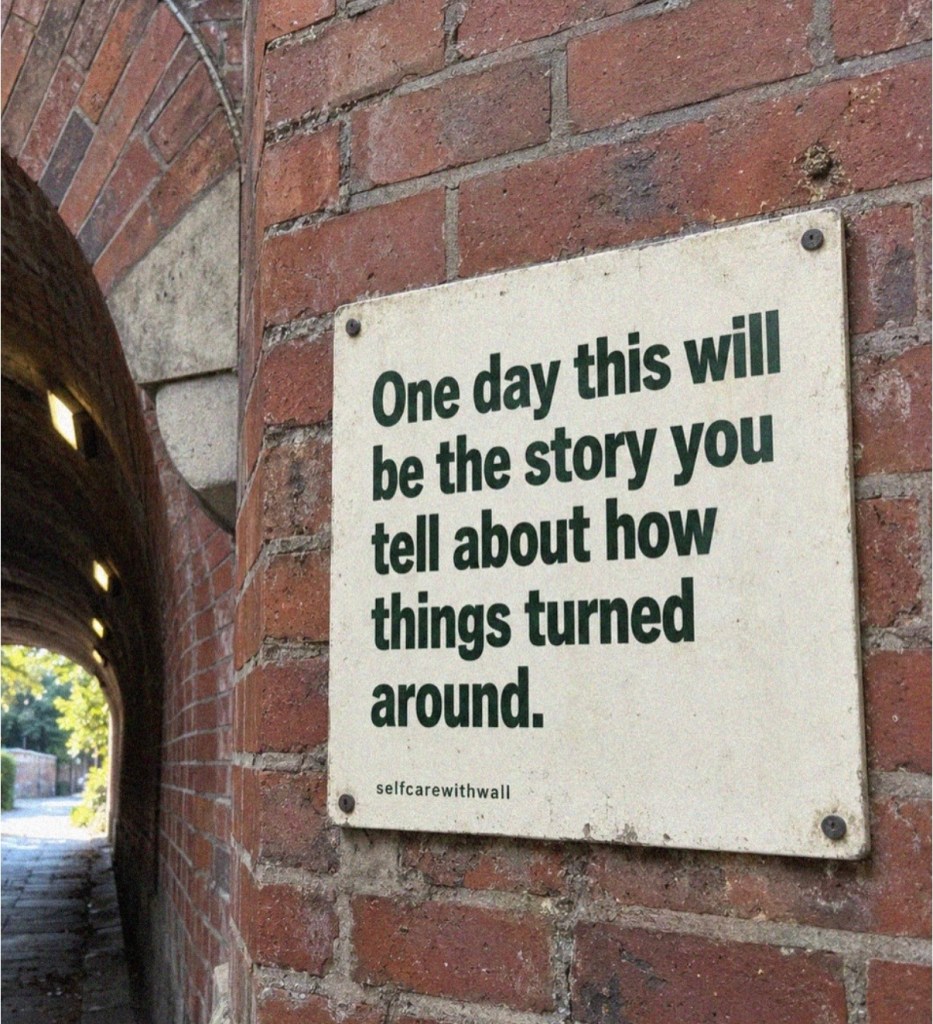
In essence, I am trying to teach my teenager what it took me 43 years to learn. And we all know how well those kinds of lessons tend to go over with teenagers.
The truth is that society has become more accepting of divorce and of couples deciding that a relationship has run its course. I think there is power in recognizing that you don’t have to remain stuck somewhere simply because you once committed to it. That said, I don’t believe the opposite extreme is helpful either. Leaving at the drop of a hat simply because someone disagrees with you isn’t necessarily the answer.
But we all have a line we don’t want others to cross.
Boundaries have historically been difficult for me to hold. As a notorious people-pleaser, I have often found myself shifting my boundaries to make someone else comfortable rather than standing my ground. Ironically, this seems to be something I struggle with primarily in romantic relationships. I suppose some of that comes from my own insecurities, my lack of confidence, and my fear of abandonment.
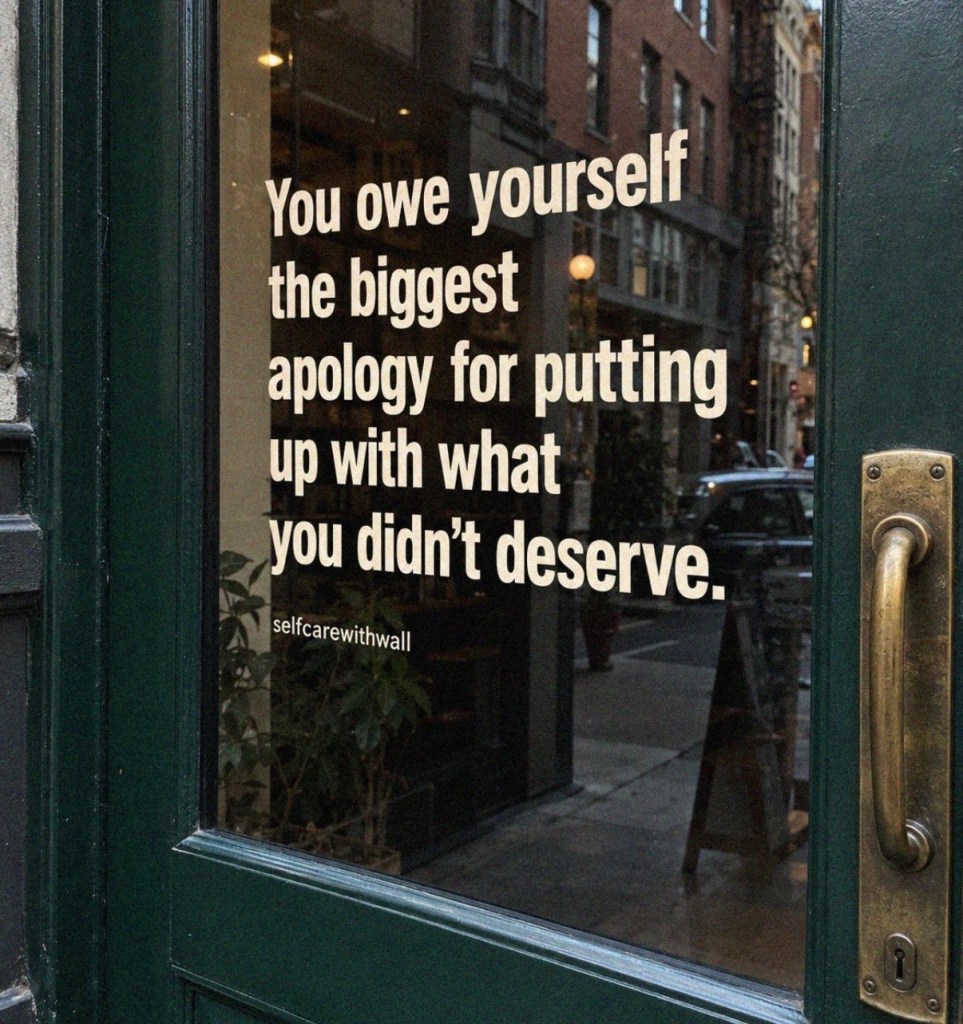
Looking back, though, I think one of the most important gifts you can give yourself is the willingness to examine your boundaries and decide what you are no longer willing to accept.
I often wonder, and if I’m being honest, sometimes feel judged by people who ask how I ended up in the situations I did. I have tried to explain that I always imagined my boundaries as a very specific line. Something happens, and that line gets pushed a little further forward. You tell yourself it’s not a big deal. It doesn’t matter as much as you thought it did. Things will change. It will get better.
And then it happens again.
And again.
Each time, you make another small adjustment. You move the line just a little further, convincing yourself that this time is different or that the circumstances justify it. Before you know it, you have spent so long shifting your boundaries that you no longer recognize where they were supposed to be in the first place. The cycle continues until one day you look back and wonder how you ever allowed things to get to where they are.
I am forever grateful that society has become accepting enough for me to speak openly, and even proudly, about my decision to walk away. Even though we still live in a culture where women can be blamed for men’s actions, where women are sometimes made to feel that they somehow brought their own suffering upon themselves, there is more room now for conversations about leaving situations that don’t serve us and, more importantly, leaving situations that cause us trauma.
I remember being asked at one point how I would feel if my daughter came to me and told me she was in a relationship similar to one of my past relationships. How would I feel knowing she was experiencing something like that?
Of course, my immediate response was that I would be devastated. I would never want that for her.
And yet, it took me so many attempts to build up the courage to walk away from each relationship over the past several years.
Why is it that we can see things so clearly when we are looking at someone else’s situation, yet struggle to offer ourselves that same clarity? Why are we so quick to recognize what someone else deserves, while simultaneously convincing ourselves to accept less?
And then I think about my son. What lessons can I teach him to ensure he learns from my experiences, too?
Lately, there has been a lot of discussion about the importance of teaching our sons, rather than focusing solely on protecting our daughters. Teaching our boys to be patient, kind, and respectful. To speak up for others. To understand that strength doesn’t mean aggression, that love and sex doesn’t give you permission to take advantage of someone, and that how you treat people matters just as much as how you feel about them.
But how do I impart those lessons on him without explaining why they mean so much to me? Without explaining why his mother understands them so well?
How do I raise my children to learn from my mistakes without explicitly explaining how I came to learn those lessons in the first place? How do I help them recognize what healthy relationships should look like when some of my own experiences have taught me what they shouldn’t?
Perhaps, in some ways, the answer is simply to model what I want them to learn moving forward. To show them that kindness and respect should never come at the expense of your own well-being, that boundaries matter, and that walking away from something that hurts you is not a failure.
But I also know that, at some point, they will ask questions. And when they do, I hope I can be honest enough to answer them without feeling that I have to protect them from the parts of my story that have shaped me.
Because if there is one thing I want my children to understand, it is that our experiences do not have to define us, but they can teach us. And sometimes, the lessons we learn the hardest are the ones we most want to spare the people we love.
This is life. Love, Mom.

