“We can do anything if we put our minds to it
Take your whole life then you put a line through it
My love is yours if you’re willing to take it
Give me your heart ’cause I ain’t gonna break it
So come away, starting today
Start a new life, together in a different place
We know that love is how all these ideas came to be”Halsey
Why is it so much easier for us to be sad than to be happy? Happiness is, arguably, what we spend so much of our lives searching for, and yet, when we finally find it, we often struggle to simply sit still and enjoy it.
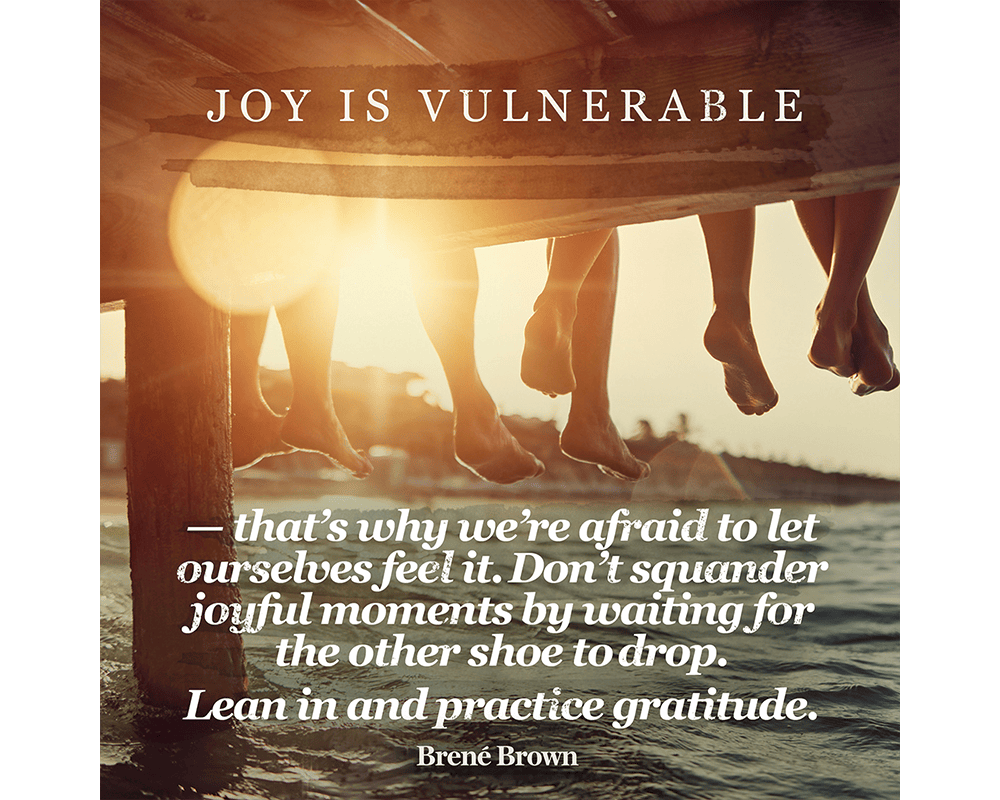
Brené Brown talks about the concept of foreboding joy, explaining that joy can actually be one of the most frightening emotions for us to experience. Rather than allowing ourselves to fully embrace a happy moment, we become hypervigilant, anticipating the inevitable disappointment or loss that might follow. This is particularly true for those who have experienced trauma. Our brains and bodies learn to remain on alert, almost as a form of emotional self-protection. We brace ourselves for the worst so that, if and when it happens, we won’t be caught off guard. Unfortunately, it’s a mechanism I’m all too familiar with. Somewhere along the way, worry and disappointment can begin to feel safer than happiness simply because we know what to expect from them.
If we look at this from a broader societal perspective, I think the same principle applies. Haven’t we all heard that misery loves company? Isn’t it often easier for people to connect through shared complaints? The weather is terrible. Our favourite team lost. Traffic is awful. Adulting is hard. So much of our everyday interaction with others is built around shared frustrations and disappointments. In fact, sharing our happiness can sometimes feel uncomfortable, almost as though we’re boasting or showing off. We’ve somehow created an environment where commiserating with one another feels more natural than celebrating with one another. Why have we done that when happiness is, ultimately, what most of us are looking for?
Interestingly, or perhaps not surprisingly, there is even a term for this: cherophobia. In popular and clinical discussions of psychology, it refers to an aversion to or fear of happiness. Some people experience a deep discomfort with positive emotions because, consciously or subconsciously, they associate happiness with the possibility of impending disappointment, loss, or grief. The idea of allowing yourself to feel good becomes intertwined with the fear that something bad must be just around the corner.
I’m not suggesting I’m qualified to diagnose myself with anything, nor do I think I necessarily experience this to that extreme. But I will readily admit that I struggle to simply sit with happiness. There is often a lingering feeling that I’m waiting for the other shoe to drop, or that I need to understand the underlying motivation behind people’s actions before I can fully relax into a moment. Is it cynicism? Is it realism shaped by past experiences? Maybe it’s a little of both. I honestly don’t know. What I do know is that I would love to believe I could simply embrace happiness without questioning it, but my history and life experiences have taught me otherwise.
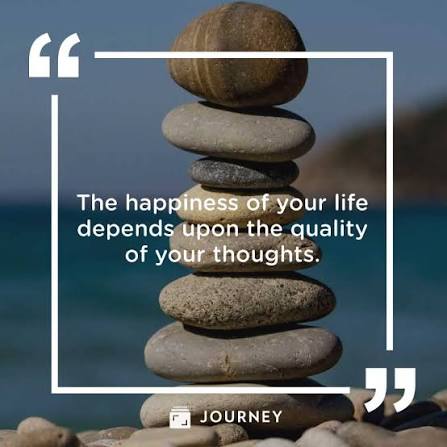
I notice it in the little things, too. When something is going particularly well, rather than simply enjoying it, I sometimes find myself looking for the catch. If someone is being particularly kind, I wonder what the motivation is. If I’m having a genuinely good day, there’s a small part of my brain already anticipating what might happen to disrupt it. Even when there is absolutely no indication that anything is wrong, I can find myself mentally preparing for the possibility that something will be. It’s almost as though I don’t entirely trust happiness unless I can identify all the ways it might disappear. And the irony is that, in trying to protect myself from being disappointed, I sometimes rob myself of the opportunity to enjoy the very thing I’ve been hoping for.
My therapist would probably say that I need to focus on making sure my individual self feels safe and that I have an authentic sense of control over my own decisions. I don’t know whether this is a direct result of past trauma, hyper-independence, being the perpetual eldest daughter, my neurotic Type A personality, or some combination of all of the above. What I do know is that being happy often requires a certain relinquishing of control.
And that’s where things get complicated.
When your happiness is, at least in part, tied to external circumstances and the actions of other people, learning to let go and trust the universe can feel like a pretty daunting task. We like to think that our happiness is entirely our own responsibility. That we are the only ones who can make ourselves happy and that we shouldn’t allow anyone else to dictate how we feel. It’s a lovely sentiment, but I’m not entirely convinced it’s realistic.
We aren’t islands. We are social beings, and our relationships, connections, and the reciprocal nature of those relationships mean that other people’s actions will inevitably have an impact on us. We can work on ourselves, establish boundaries, develop coping mechanisms, and take responsibility for our own emotional well-being, but we cannot completely remove other people from the equation. Their choices affect us. Their words affect us. Their ability to show up, or not show up, affects us. Pretending otherwise doesn’t make it any less true.
So what is the answer? What are we supposed to do with all of this?
Do we simply release ourselves to the universe and say que sera, sera? Whatever happens, happens, and we’ll deal with it when we get there? Is there a way to be genuinely, authentically happy while simultaneously acknowledging that heartbreak is always a possibility? How much of ourselves do we allow others to see? How much do we trust the process, let our guard down, and cross our fingers that, whatever happens next, we’ll be able to handle it?
And perhaps most importantly, where is the balance between protecting ourselves and actually allowing ourselves to live?
As a teacher who works with neurodivergent children, one of my areas of focus is emotional regulation and helping students identify and label their feelings. Something I talk about often is the duality of emotions. We can feel two seemingly contradictory things at the same time. Emotions don’t exist in isolation. We can be happy and sad, excited and nervous, hopeful and afraid. One feeling doesn’t necessarily cancel out the other.
Perhaps that’s something we need to remind ourselves of as adults, too.
Maybe the goal isn’t to eliminate the fear that something could go wrong. Maybe it’s to learn that we can experience happiness without needing a guarantee that it will last. We can be excited about something while acknowledging that it might not work out. We can allow ourselves to care about someone while understanding that they might hurt us. We can enjoy where we are without needing to know exactly where we’re going.
I suppose the bigger question is how much of each emotion we allow ourselves to carry. How much happiness, how much apprehension, how much trust, and how much self-preservation make up a healthy emotional balance?
I don’t have an answer. I suspect most of us don’t.
But I wonder how much happiness we miss out on while we’re busy preparing ourselves for the possibility of losing it.
This is life. Love, Mom.


Leave a Reply