Tag: writing

  • Bracing for the Fall

    Bracing for the Fall

    “We can do anything if we put our minds to it
    Take your whole life then you put a line through it
    My love is yours if you’re willing to take it
    Give me your heart ’cause I ain’t gonna break it
    So come away, starting today
    Start a new life, together in a different place
    We know that love is how all these ideas came to be”

    Halsey

    Why is it so much easier for us to be sad than to be happy? Happiness is, arguably, what we spend so much of our lives searching for, and yet, when we finally find it, we often struggle to simply sit still and enjoy it.

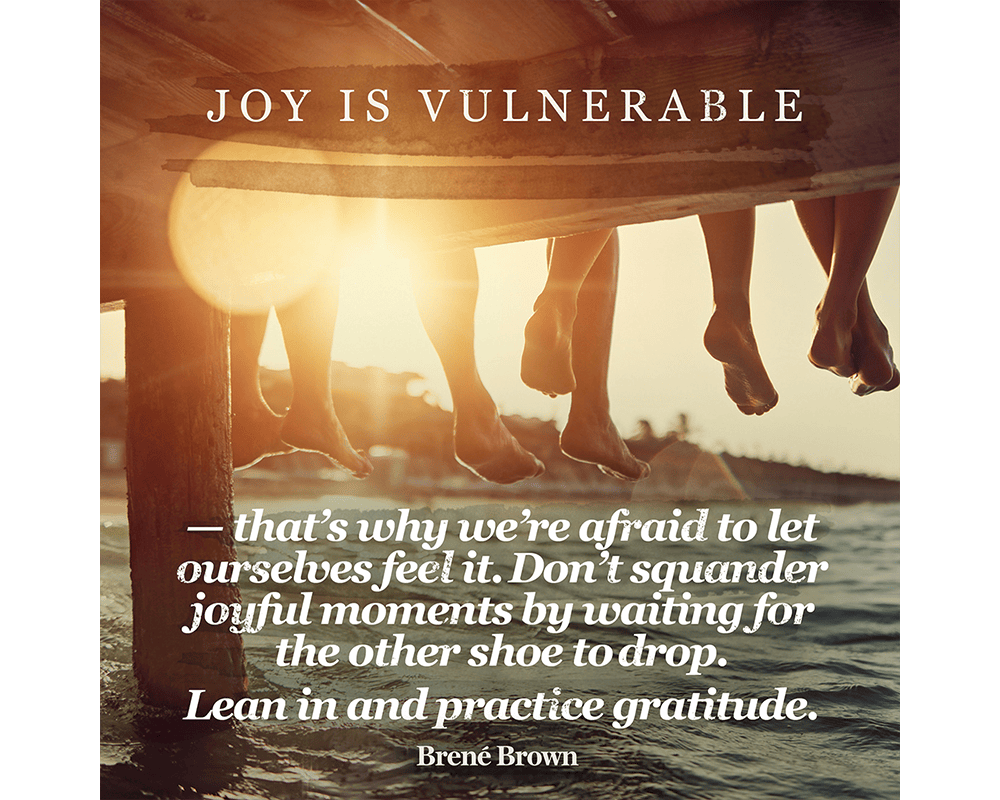
    Brené Brown talks about the concept of foreboding joy, explaining that joy can actually be one of the most frightening emotions for us to experience. Rather than allowing ourselves to fully embrace a happy moment, we become hypervigilant, anticipating the inevitable disappointment or loss that might follow. This is particularly true for those who have experienced trauma. Our brains and bodies learn to remain on alert, almost as a form of emotional self-protection. We brace ourselves for the worst so that, if and when it happens, we won’t be caught off guard. Unfortunately, it’s a mechanism I’m all too familiar with. Somewhere along the way, worry and disappointment can begin to feel safer than happiness simply because we know what to expect from them.

    If we look at this from a broader societal perspective, I think the same principle applies. Haven’t we all heard that misery loves company? Isn’t it often easier for people to connect through shared complaints? The weather is terrible. Our favourite team lost. Traffic is awful. Adulting is hard. So much of our everyday interaction with others is built around shared frustrations and disappointments. In fact, sharing our happiness can sometimes feel uncomfortable, almost as though we’re boasting or showing off. We’ve somehow created an environment where commiserating with one another feels more natural than celebrating with one another. Why have we done that when happiness is, ultimately, what most of us are looking for?

    Interestingly, or perhaps not surprisingly, there is even a term for this: cherophobia. In popular and clinical discussions of psychology, it refers to an aversion to or fear of happiness. Some people experience a deep discomfort with positive emotions because, consciously or subconsciously, they associate happiness with the possibility of impending disappointment, loss, or grief. The idea of allowing yourself to feel good becomes intertwined with the fear that something bad must be just around the corner.

    I’m not suggesting I’m qualified to diagnose myself with anything, nor do I think I necessarily experience this to that extreme. But I will readily admit that I struggle to simply sit with happiness. There is often a lingering feeling that I’m waiting for the other shoe to drop, or that I need to understand the underlying motivation behind people’s actions before I can fully relax into a moment. Is it cynicism? Is it realism shaped by past experiences? Maybe it’s a little of both. I honestly don’t know. What I do know is that I would love to believe I could simply embrace happiness without questioning it, but my history and life experiences have taught me otherwise.
    I notice it in the little things, too. When something is going particularly well, rather than simply enjoying it, I sometimes find myself looking for the catch. If someone is being particularly kind, I wonder what the motivation is. If I’m having a genuinely good day, there’s a small part of my brain already anticipating what might happen to disrupt it. Even when there is absolutely no indication that anything is wrong, I can find myself mentally preparing for the possibility that something will be. It’s almost as though I don’t entirely trust happiness unless I can identify all the ways it might disappear. And the irony is that, in trying to protect myself from being disappointed, I sometimes rob myself of the opportunity to enjoy the very thing I’ve been hoping for.

    My therapist would probably say that I need to focus on making sure my individual self feels safe and that I have an authentic sense of control over my own decisions. I don’t know whether this is a direct result of past trauma, hyper-independence, being the perpetual eldest daughter, my neurotic Type A personality, or some combination of all of the above. What I do know is that being happy often requires a certain relinquishing of control.

    And that’s where things get complicated.

    When your happiness is, at least in part, tied to external circumstances and the actions of other people, learning to let go and trust the universe can feel like a pretty daunting task. We like to think that our happiness is entirely our own responsibility. That we are the only ones who can make ourselves happy and that we shouldn’t allow anyone else to dictate how we feel. It’s a lovely sentiment, but I’m not entirely convinced it’s realistic.

    We aren’t islands. We are social beings, and our relationships, connections, and the reciprocal nature of those relationships mean that other people’s actions will inevitably have an impact on us. We can work on ourselves, establish boundaries, develop coping mechanisms, and take responsibility for our own emotional well-being, but we cannot completely remove other people from the equation. Their choices affect us. Their words affect us. Their ability to show up, or not show up, affects us. Pretending otherwise doesn’t make it any less true.

    So what is the answer? What are we supposed to do with all of this?

    Do we simply release ourselves to the universe and say que sera, sera? Whatever happens, happens, and we’ll deal with it when we get there? Is there a way to be genuinely, authentically happy while simultaneously acknowledging that heartbreak is always a possibility? How much of ourselves do we allow others to see? How much do we trust the process, let our guard down, and cross our fingers that, whatever happens next, we’ll be able to handle it?

    And perhaps most importantly, where is the balance between protecting ourselves and actually allowing ourselves to live?

    As a teacher who works with neurodivergent children, one of my areas of focus is emotional regulation and helping students identify and label their feelings. Something I talk about often is the duality of emotions. We can feel two seemingly contradictory things at the same time. Emotions don’t exist in isolation. We can be happy and sad, excited and nervous, hopeful and afraid. One feeling doesn’t necessarily cancel out the other.

    Perhaps that’s something we need to remind ourselves of as adults, too.

    Maybe the goal isn’t to eliminate the fear that something could go wrong. Maybe it’s to learn that we can experience happiness without needing a guarantee that it will last. We can be excited about something while acknowledging that it might not work out. We can allow ourselves to care about someone while understanding that they might hurt us. We can enjoy where we are without needing to know exactly where we’re going.

    I suppose the bigger question is how much of each emotion we allow ourselves to carry. How much happiness, how much apprehension, how much trust, and how much self-preservation make up a healthy emotional balance?

    I don’t have an answer. I suspect most of us don’t.

    But I wonder how much happiness we miss out on while we’re busy preparing ourselves for the possibility of losing it.

    This is life. Love, Mom.
  • What Doesn’t Kill You Makes You Stronger

    What Doesn’t Kill You Makes You Stronger

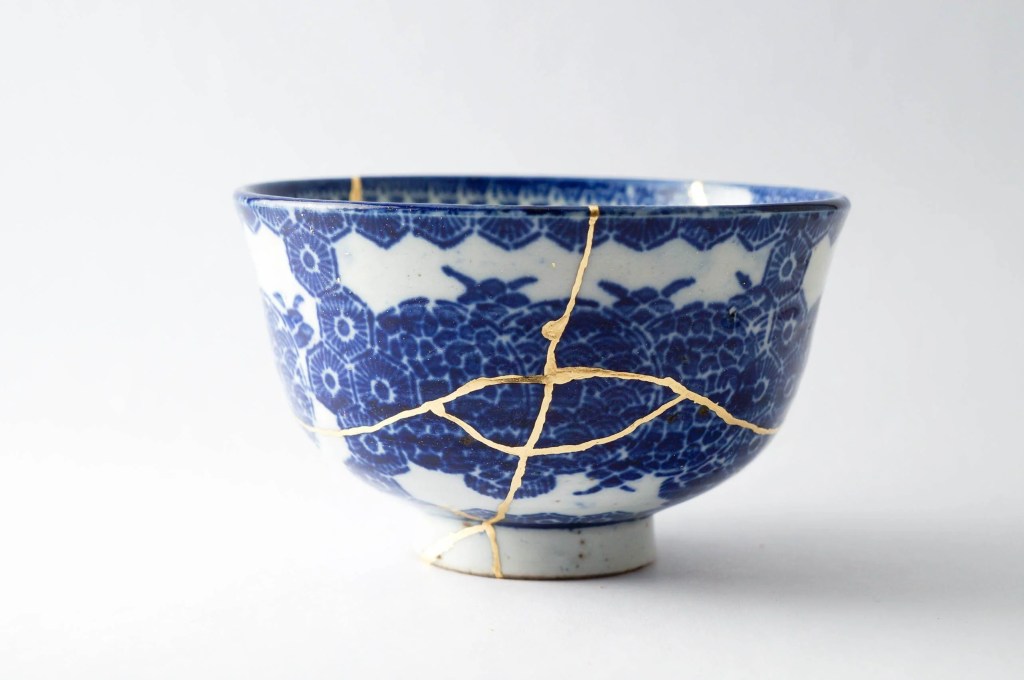
    There is an ancient Japanese technique for repairing pottery known as kintsugi, in which broken pieces are joined back together, and the cracks are highlighted with gold or silver. Rather than hiding the damage, the technique celebrates the history of the object and everything it has been through. The cracks become part of its beauty, a reminder that something can be broken and still have value.

    This idea has always resonated with me, and at times, it weighs heavily on me.

    We are constantly reminded, in one form or another, that what doesn’t kill us makes us stronger. We are encouraged to celebrate our flaws, our struggles, and our trials and tribulations as the things that shape us into who we are. Maybe it’s my realism, or perhaps my cynicism, but sometimes I wonder if we tell ourselves these things simply to make ourselves feel better.

    When I was younger, my parents used to tell me that having a bird poop on you was good luck. I always found this hilarious because no one goes out of their way to have a bird poop on them. It was something we only ever said to someone after it happened, which makes me wonder whether it was just a veiled attempt to put a positive spin on an otherwise unpleasant situation.

    And isn’t that what we do with so many of life’s hardships?

    Nobody actively seeks out adversity or difficult experiences, and yet, when they happen to us or someone we care about, we reach for the same familiar explanations. Everything happens for a reason. God gives his hardest battles to his toughest soldiers. These are the experiences we needed to grow, the lessons we were meant to learn.

    But what if that’s all a load of bullshit?

    Are we simply trying to make ourselves feel better about things that hurt us? Adversity and hardship are, of course, part of life. Unless we manage to live in a bubble, we will all face any number of challenges throughout our days, weeks, years, and lives. That much is inevitable. I’m not suggesting otherwise. I just wonder what would happen if we stopped trying to justify the difficult things that happen to us.

    What if some things simply happened? What if we could acknowledge that hardship is part of being human without needing to assign meaning to every painful experience? Not everything has to be a lesson. Not every struggle needs to serve a greater purpose. Sometimes, bad things happen, and there is no deeper explanation to uncover.

    I once read something that suggested we need to reframe the question of why bad things happen to good people. Perhaps the better understanding is that bad things happen to everyone; it’s how we respond to them that matters.

    There are days when I wish I hadn’t gone through some of the things I’ve experienced. I don’t want those lessons. I don’t want that growth. The toll it has taken on my mental health, even now, feels far greater than anything I could have gained from the experience.

    Yes, I have come out the other side stronger in some ways. I have learned things about myself, and I have grown. But that doesn’t mean I’m grateful for what I had to endure to get here. Both things can be true. I can recognize the ways I’ve changed and still wish I hadn’t needed to change that way in the first place.

    Maybe that’s the part we don’t talk about enough. We can acknowledge our resilience without romanticizing what it took to develop it. We can be proud of how we put ourselves back together without pretending we’re glad we were broken.

    I’m not entirely sure what the purpose of this post is, other than to get these thoughts out of my head and onto a page. Lately, writing has started to feel cathartic again. Maybe it’s because I have so many ideas constantly bouncing around in my mind, and putting them down on virtual paper helps me make sense of them. Maybe I don’t need to have a clear point or a neatly packaged conclusion. Maybe sometimes, it’s enough to sit with a thought and see where it takes me.

    I recognize that my voice and perspective here may come across as jaded. Maybe they are. Maybe I’ve reached a point where I’m less interested in finding the silver lining in everything and more interested in being honest about what things actually cost us.

    Perhaps that’s the point.

    I still appreciate the beauty of kintsugi. I understand the sentiment behind celebrating the cracks rather than hiding them. But I also think there should be room for the part of us that wishes the pottery had never broken in the first place.

    We can find beauty in what remains without pretending we wanted it to break.

    This is life. Love, Mom.

  • Though The Mountain May Crumble, You Will Not

    Though The Mountain May Crumble, You Will Not

    You may write me down in history
    With your bitter, twisted lies,
    You may trod me in the very dirt
    But still, like dust, I’ll rise.

    “ Still I Rise” Maya Angelou

    I found myself speaking to someone recently about how society’s views on marriage have evolved, changing both the roles men and women play within it and the likelihood of marriages lasting. When we look back at previous generations, there were so many factors that influenced a woman’s decision to stay in a marriage. Traditional or deeply religious thinkers often hold the belief that marriage is sacred and that once you make that commitment, you stay in it forever, for better or worse.

    My daughter told me the other day that, because of my experiences, she doesn’t know if love exists.

    She said that, after watching me navigate my past two relationships, knowing that neither my marriage to her father nor my most recent relationship lasted, she wasn’t sure what to believe about love. Perhaps the most interesting part of that conversation was that she was worried about hurting MY feelings by telling me how she felt. In reality, it was a conversation I was grateful to have.

    Her comment caught me off guard for a moment, but I was able to recover quickly and explain what I hoped she would take away from my experiences. I didn’t want her to believe that love doesn’t exist. Because, truly, at the end of the day, I still believe there is someone out there for everyone.

    We are no longer living in a time when we can expect to be struck down by cholera or scurvy in our thirties. We have time. Time to figure ourselves out, time to grow, and time to make sure we find the right person.

    What I did tell her was that I hoped the lesson she took from my experiences was never to stay somewhere she was unhappy. I never want her, or myself, to feel that we have to remain in a situation simply because our conscience, our upbringing, or society tells us we should. I hope she learns to recognize when she is being disrespected and feels confident enough to walk away from relationships that no longer serve her.

    In essence, I am trying to teach my teenager what it took me 43 years to learn. And we all know how well those kinds of lessons tend to go over with teenagers.

    The truth is that society has become more accepting of divorce and of couples deciding that a relationship has run its course. I think there is power in recognizing that you don’t have to remain stuck somewhere simply because you once committed to it. That said, I don’t believe the opposite extreme is helpful either. Leaving at the drop of a hat simply because someone disagrees with you isn’t necessarily the answer.

    But we all have a line we don’t want others to cross.

    Boundaries have historically been difficult for me to hold. As a notorious people-pleaser, I have often found myself shifting my boundaries to make someone else comfortable rather than standing my ground. Ironically, this seems to be something I struggle with primarily in romantic relationships. I suppose some of that comes from my own insecurities, my lack of confidence, and my fear of abandonment.

    Looking back, though, I think one of the most important gifts you can give yourself is the willingness to examine your boundaries and decide what you are no longer willing to accept.

    I often wonder, and if I’m being honest, sometimes feel judged by people who ask how I ended up in the situations I did. I have tried to explain that I always imagined my boundaries as a very specific line. Something happens, and that line gets pushed a little further forward. You tell yourself it’s not a big deal. It doesn’t matter as much as you thought it did. Things will change. It will get better.

    And then it happens again.

    And again.

    Each time, you make another small adjustment. You move the line just a little further, convincing yourself that this time is different or that the circumstances justify it. Before you know it, you have spent so long shifting your boundaries that you no longer recognize where they were supposed to be in the first place. The cycle continues until one day you look back and wonder how you ever allowed things to get to where they are.

    I am forever grateful that society has become accepting enough for me to speak openly, and even proudly, about my decision to walk away. Even though we still live in a culture where women can be blamed for men’s actions, where women are sometimes made to feel that they somehow brought their own suffering upon themselves, there is more room now for conversations about leaving situations that don’t serve us and, more importantly, leaving situations that cause us trauma.

    I remember being asked at one point how I would feel if my daughter came to me and told me she was in a relationship similar to one of my past relationships. How would I feel knowing she was experiencing something like that?

    Of course, my immediate response was that I would be devastated. I would never want that for her.

    And yet, it took me so many attempts to build up the courage to walk away from each relationship over the past several years.

    Why is it that we can see things so clearly when we are looking at someone else’s situation, yet struggle to offer ourselves that same clarity? Why are we so quick to recognize what someone else deserves, while simultaneously convincing ourselves to accept less?

    And then I think about my son. What lessons can I teach him to ensure he learns from my experiences, too?

    Lately, there has been a lot of discussion about the importance of teaching our sons, rather than focusing solely on protecting our daughters. Teaching our boys to be patient, kind, and respectful. To speak up for others. To understand that strength doesn’t mean aggression, that love and sex doesn’t give you permission to take advantage of someone, and that how you treat people matters just as much as how you feel about them.

    But how do I impart those lessons on him without explaining why they mean so much to me? Without explaining why his mother understands them so well?

    How do I raise my children to learn from my mistakes without explicitly explaining how I came to learn those lessons in the first place? How do I help them recognize what healthy relationships should look like when some of my own experiences have taught me what they shouldn’t?

    Perhaps, in some ways, the answer is simply to model what I want them to learn moving forward. To show them that kindness and respect should never come at the expense of your own well-being, that boundaries matter, and that walking away from something that hurts you is not a failure.

    But I also know that, at some point, they will ask questions. And when they do, I hope I can be honest enough to answer them without feeling that I have to protect them from the parts of my story that have shaped me.

    Because if there is one thing I want my children to understand, it is that our experiences do not have to define us, but they can teach us. And sometimes, the lessons we learn the hardest are the ones we most want to spare the people we love.

    This is life. Love, Mom.