Tag: momlife

  • The {Dreaded} Elf On The Shelf

    The {Dreaded} Elf On The Shelf

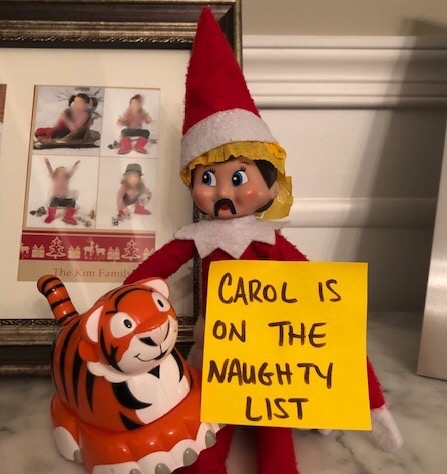
    There are very few holiday traditions that are as polarizing as the “Elf on the Shelf”. Whether or not you participate in having an elf in your home may actually be more controversial than apple pie vs. pecan pie. If you are not familiar with the elf, here is a bit of a backstory. It began as a storybook in the early 2000s. About ten years later, the book was turned into a short animated film, and the elf dolls were born. The premise behind the book and subsequent film is that an elf arrives before Christmas and watches to ensure children are behaving. Then, at night, the elf flies back to the North Pole to report to Santa. When it returns home, it lands in a different place and in the morning children have to find it. Many households love the elf tradition. I originally learned about it from my sister-in-law when she began having the elf “visit” annually. In fact, even as my niece and nephew grew older and knew the elf was merely a toy, she still had it move around and do silly things, and they enjoyed finding it just as much. There are some families, however, who either participate begrudgingly or refuse to at all.

    According to a 2012 article written when the elf was just released “It’s a marketing juggernaut dressed up as a “tradition.” Yes, all traditions are ultimately man-made and therefore artificial, but there’s something uniquely fake about the Elf.” (https://www.theatlantic.com/) The article goes on to ask “Why inject a note of fear and suspicion into a season and a holiday that are meant to be about love, togetherness, and forgiveness? Perhaps, Christmas aside, raising morally aware children requires we go several steps beyond the concept of a naughty/nice dichotomy.”

    I agree with some of the sentiments of what is written here. But I think that this is a very myopic view. The concept of naughty/nice did not originate from the elf, it rather capitalizes on it. There are scores of songs and stories about being nice so Santa comes and gives you a gift, instead of a lump of coal. While there may be truth to what is written in the article, I think that you should try and participate in whatever brings you joy. There are ways to play into the Elf on the Shelf that aren’t all-or-nothing. For example, if children are being naughty, or have made poor choices, it doesn’t mean that Santa isn’t coming at all. It’s a reminder to be mindful and a chance to ask for forgiveness for negative behaviour. How many of us have threatened to call Santa at one point or another? This is no different. If there is anything this pandemic has taught us, it is that life is short – live it with love. Ironically, some parents have taken the pandemic and used it to their advantage – putting the elf into quarantine for the first 14 days so they don’t have to move it as often. I’ll admit, that is a fun idea, but I also enjoy how much J and N laugh when they wake up in the morning.

    Our elf, Chingu, (which is the Korean word for “friend”), came to us about 5 years ago. Since then it has been no small task coming up with ideas for how she can get into mischief. Like many, our elf is very silly and gets into a lot of things. Yes, sometimes she is in a different spot every day (my fall-back when I forget to move her around), but she also does funny things. Our elf comes on December 1, and always brings an advent calendar for each of the kids. I have to say, I enjoy trying to be creative and come up with new ideas. I am at the point where I will surely need to recycle past ideas, but that’s okay! As I mentioned before, it is all in good fun.
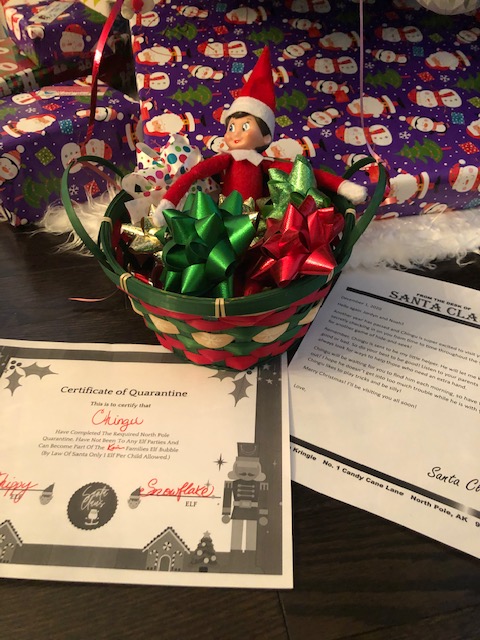
    Arriving with calendars

    Like anything else, I think that it has to work with your family. There is a general, almost audible sigh that comes from parents who don’t enjoy the task, and feel that they have to one-up their children’s friends. There are scores of Facebook mom-group posts lamenting about the dreaded elf, and ideas for how to place it. There are Pinterest boards and Instagram accounts dedicated to this tiny doll. There are also Etsy kits where people have planned out the entire month of “placements” for the elf. I also know of people who have had the elf “break a leg” so they cannot move for extended periods.

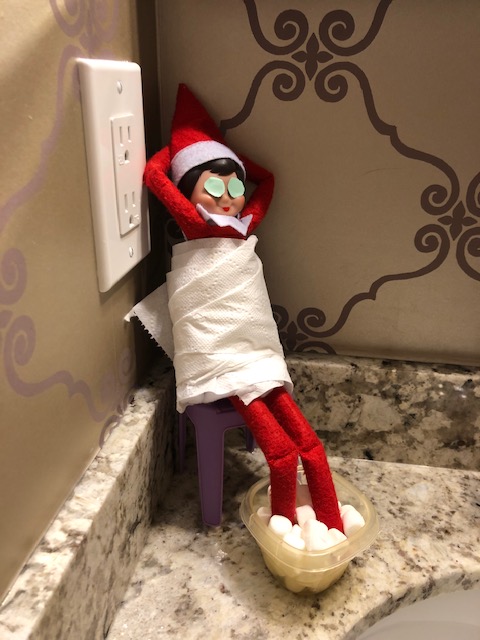
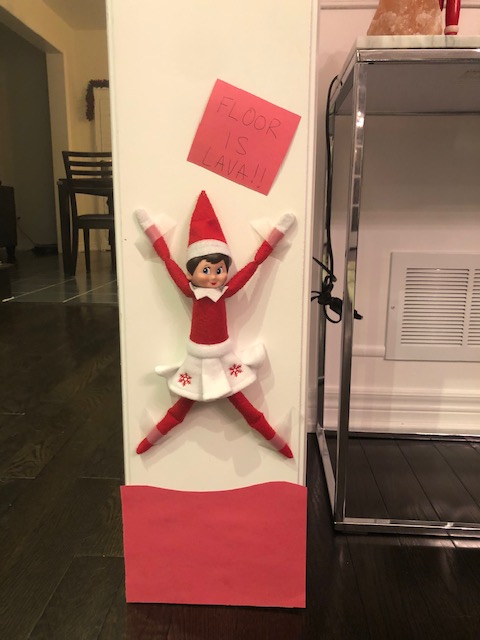
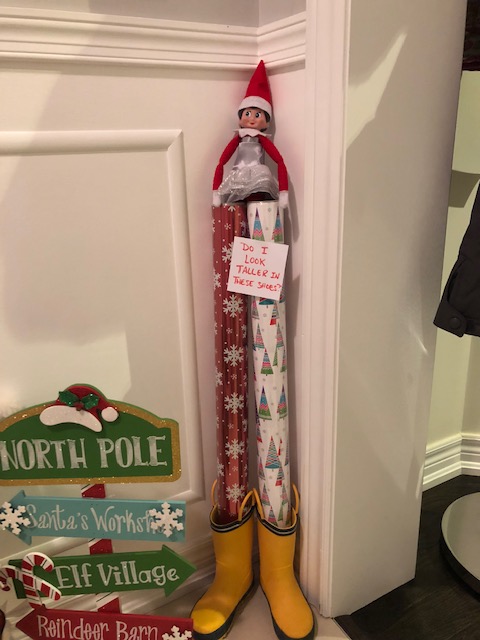
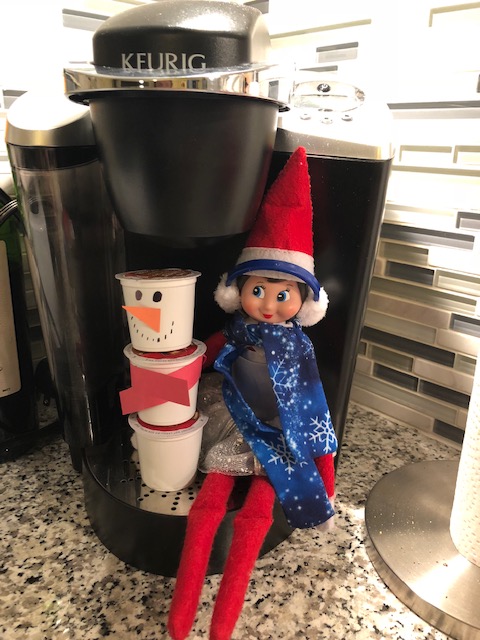
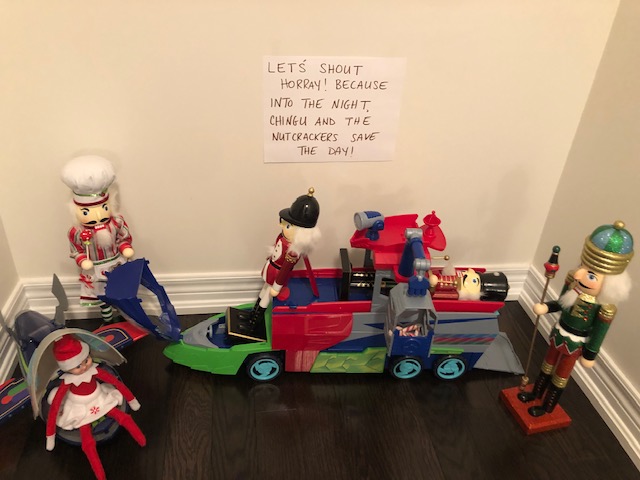
    If you are an “elf home” – the countdown begins! If not, that’s okay, too. And, if you are in need of some ideas, here are some past favourites of mine:

    This is life. Love, Mom.

  • How To Become A Pinterest Mom

    How To Become A Pinterest Mom

    The idea of a Pinterest mom is simple, really. You spend your free time making Halloween costumes, organizing your home with countless woven baskets, baking healthy meals from scratch and making school lunches filled with cucumbers shaped like flowers and sandwiches shaped like zoo animals. No outing is too small for full makeup and polished hair. You have everything together, and show off your impeccable fashion sense in perfectly curated social media posts. You make weekly trips to your local craft store to stock up on DIY projects you will do with your kids. This is the 21st-century reincarnation of an idea that has been around since the beginning of time.

    There are so many women who wish their lives looked more like a page out of a magazine (or social media square). They want their home to be impeccable, all facets of life to be perfect, and be able to do it all (and do it all perfectly). I’m here today to spill the secret of how to evolve into this ethereal being. So want to know how? Step 1: It will not happen 100% of the time. Step 2: Find a new dream.

    If this all sounds ridiculous, we can now be friends. The truth is, we may (or may not) have elements of this in all of us. We might be good at one aspect of our lives and struggling in others. To some extent, this insanity goes both ways. I know women who are amazing at certain things but get embarrassed when it is pointed out. Instead of celebrating our accomplishments, we minimize them to avoid feeling boastful or braggy. This shouldn’t be the case either! I have friends who sew their children’s Halloween costumes from scratch. I have friends to make their own snacks. I, myself try and bake when I can. But I also have friends who run out on October 30 to find a Halloween costume for their kids and those who stock up on snacks when there’s a sale at Walmart. Does one or the other make them bad mothers? Absolutely not! Each judge themselves for what they canning can’t do? Probably to some extent.

    Truly, though, why do we do this to ourselves? Why do we put so many unrealistic expectations on ourselves, and then feel awful when we don’t live up to them? In theory, we should be happy with our lives and not worry about what others think. But everyone knows that is not actually true. It is so much easier said than done to brush things off and say that we don’t care. Now let me be clear, I do know that some people genuinely don’t care and more power to them. But these women are the unicorns of our society.

    So why is the judgement of others so important to us? Why is our happiness affected by how others perceive our accomplishments, and how effectively we have our shit together? As the “judger”, it is a bit easier to explain. The psychology behind this is that we judge one another because we have inadequacies in ourselves. Those who judge others’ decisions are projecting their feelings onto others.

    And I can see how this is true, but what does it say about how we judge ourselves? What does it say about how we worry that we will be judged by others? The thinking is a defence mechanism of sorts. We plan for what others might think so we can know how to react. Or we judge ourselves first before anyone else gets a chance to. But why can’t we just be confident and have THAT be projected onto others? Tell anyone who thinks otherwise where they can go….? There is a saying that we are our own worst critics, and this fits well here.

    I have come to terms with the fact that I am not perfect. There are areas that I want to improve, for sure. But there is no way I can be everything to everyone. It is just mathematically impossible to give 100% in more than one place. My house will never be spotless (unless I’ve just finished a rage-cleaning binge). My kids will eat pre-packaged snacks. My life will not look like a Pinterest board.

    Most days, I am okay with this. I focus on the positives and what I AM able to accomplish on that day. I shrug off my own insecurities and try not to be bothered by others. But other days are darker. I look at others’ social media through green eyes. I am jealous of those who can do more, do better, accomplish things I cannot. I judge myself before others can “get to me”. It creeps into my dreams and wakes me up at night. I have been told by others that I am rather outspoken, sometimes without a filter. That I can share my thoughts with others and I am not afraid of judgement. I can put on a tough shell, and pretend I am invincible. But in reality that is just not the case. What we see is rarely what we get. And I think THAT is the point. I would like to imagine that even “Pinterest moms” have those insecure days. Because it will never be enough and no one will ever truly have it all together, even if it looks that way through our lens. The sooner we realize this, the happier we probably will be.

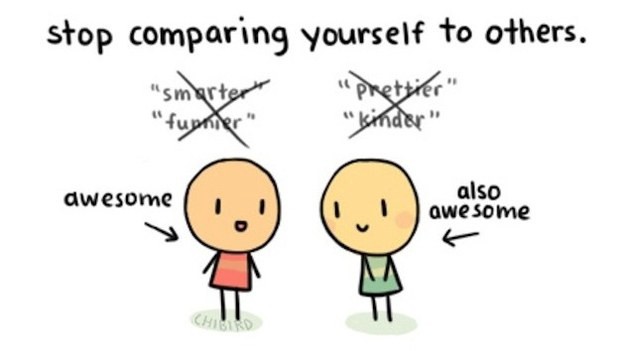
    Social Comparison Theory proposes that we determine our worth by comparing ourselves to others. In fact according to Psychology Today, as much as 10% of our thoughts are comparison in nature. Did that surprise you? There are days when I feel like it’s more… The point is that no one is immune to this struggle and we are all fighting it in our own way. So what is the answer? Just like the secret to becoming the perfect mom – there isn’t one. It is human nature to judge ourselves and compare ourselves to others. That can be a motivator or a deterrent – do we want to use it to push ourselves out of our comfort zone and try something new, or is it worth it to bother? I think that happiness lies not in trying to ignore these comparisons or brush them aside, but in harnessing them and using them to motivate us to be better. To try something new, cook a new dish, read a new book, or redecorate with a new rug – not perfect (because nothing should be), but better.

    This is not to say that this is working for me, and I can tell you that it will definitely be easier to adopt this mindset on good days over the darker ones. But, I will give it a try.

    This is life. Love, Mom.

  • Lest We Forget

    Lest We Forget

    This past week was Remembrance Day. The day we set aside to thank those who have fought for our freedom… those who have survived, and those who have sacrificed. As Canadians, we are living in a free, democratic society, as a result of what others before us gave up. When I think about Remembrance Day, my mind automatically goes to World War II. As the granddaughter of a holocaust survivor, the atrocities of the past weigh heavily on me. The holocaust was something that robbed us of our heritage. It took away family members I would never meet. It put scars on our hearts as we heard stories as if they were movies. I am part of the last generation who will hear, first hand, what occurred. They say that the most powerful way to learn of experiences is to hear from the mouth of the person who experienced them. My children will never have that. Generations after them will never have that.

    I understand how those who have family members who went through earlier wars must feel. First-hand accounts of those experiences are few and far between. We must rely on books, movies, and second-hand stories. It is important, but never the same. This is even more prevalent for me as I raise my own children. I want them to understand their history – the events that shaped their ancestors. “Lest we forget” means we must remember what has happened. It cannot be forgotten in hopes that history will never be repeated. It isn’t about holding a grudge, but about honouring what our ancestors gave up (willing or not) in order to give us a better life.

    Part of honouring that is allowing their voices to be heard. Years ago, before his death, my sister interviewed my grandfather for a school project about the holocaust. I am forever grateful to her for doing this. At the time, I don’t think we understood the true gift she was giving us. So today I wanted to honour his memory by using this space to share his story, unedited and in his own words.

    How was your family affected and where were they sent?

    I don’t know where they went. The last time I saw them was in 1942 right after Yom Kippur night. My father got up in the middle of the night and he saw guys in black uniforms standing. In the morning everybody had to go out. We went out and I remember this was my cousin Morris’s sister, my brother my sister and myself. My mother divided us and she gave a few bucks to everyone to put away because we were thinking that we were going to a camp. There were standing there Germans from the German S.S. and they were directing one to the left and one to the right. I didn’t know where I was going and I didn’t know where my father and sister were going or where my brothers were going. We went and they sent us to a factory and this was the last time that I saw my parents. This was the day after Yom Kippur. Later on, we went to an ammunition factory. When I was there it was 1942. They took us in some cars or wagons. They put us in and they disinfected us. Later on, they sent us to a garage on top where everyone was sleeping together- all the men. I hardly ever saw a woman at this time. What happened next was I had been there for about a month and a half and I didn’t know anything and I met another guy. We decided we were going to run away. We ran out and it was at night and the doors were open. This was a big factory and we came in. Trains were going out slowly. Later we jumped off one of the trains. We jumped next to a small ghetto. As I went in there were barbed wire fences and Polish police.

    So, later on, I started going to a place where they were making iron. I got a job there and I was working, coming and going every morning. I started to get restless and I was trying to run out of this ghetto. On the way back there were forty people in an ammunition factory called Hemro. When I was coming, the guy started checking and he saw forty-one people. They started asking everybody but nobody wanted to say anything. He said that if the person who shouldn’t be there didn’t come out because there were forty-one, he was going to shoot ten! So, I went out. There was a butcher shop over there. So the guy kicked me and he threw me into the butcher shop, didn’t ask any questions, this German policeman. He kicked me and he let me go.

    On the sixteenth of January 1945 they took us all out and they sent us to Germany. To Buchenvald. And I wound up there and on the way in I was looking and I saw my cousin Leon on the other side. He was going out already and we were going in. I said, “What’s doing over there?” He said it was nothing, they just put powder on your arms and they shaved your head and they let you go out. But without clothes. At this time I lost all my pictures and everything from my father and mother and my sister and brother. So they let me out and I had to throw away everything. They gave me new clothes, clothes that are like pyjamas. They are with stripes. My number was I think 150 505.

    From Buchenvald they sent us to a place called Ranenbook. This was a gas chamber. They didn’t gas anyone over there while I was there. They led us all into a place like a shower. They crammed about 500 people in. We were there for only a couple of days and every morning they would grab a lot of people and they would just take them. There weren’t only Jews. There were Germans, and Polish, I think. It was a place where they were making rackets. Every two feet there was a German soldier, an S.S., with a machine gun. 

    Next, they sent us to Dorey. From there they sent us to Rockleh Barodeh. There were camps wired around, and bunks. In this camp, we stayed for six to eight weeks. We were working in a mountain. We were digging, making factories in the mountains. We were breaking up the stones. It was terrible. We were there in couples. When you were pushing out the stones, there were pieces of wood sticking up. The stones and wood were hitting you! If they didn’t hit your head, they would break your legs. Or your arms. We were there for quite a while.

    One morning they took everybody for a march. The march was going right down the road. I think I had my father’s cousin there and he got sick. They took away all the sick and I think they killed him. We were about 30 000 people, but most people died on the way because there was no food and they were pushing us and taking us to side roads. Those people from the S.S. with machine guns and dogs. German Shepherds. They took us and we were walking for a month and a half, I think. I remember one time we were going to the water that was running on the side road. We went to drink it and they shot half the people. We were less every day. I was losing weight constantly.

    Then there were fighter planes coming down and we got shot. I got shot in the leg. After this, I dropped down to about 80 pounds. I had no food. So, the Red Cross came around with wagons and they were going to give out parcels. I grabbed a parcel because I hadn’t eaten for weeks! I started eating and I got sick. I almost died, because if it had been only bread, it would have been okay but there was meat and all kinds of things inside. I hadn’t eaten for three weeks! They only had given me a little piece of bread. So when the Americans started hitting the Germans, we were sleeping and we heard them. Leon and another guy were carrying me. They ran out and got a couple of Americans. They took me in their jeep, they took me to the hospital and they took out the bullet.

    After one or two days I woke up and I was in a white bed! I went from the mud to a white bed.  We had nurses over there in the hospital. This was, I think, May the first or the second. I was in Shvarim, and I got better and I left the hospital.

    My hope in sharing this is that his words will forever be remembered – engraved in this social space. We will always remember. Lest we forget.

    This is life. Love, Mom.

  • On Wednesdays We Wear Pink

    On Wednesdays We Wear Pink

    Once upon a time, there was a movie about a girl who was homeschooled, trying to fit into the jungle that is high school. If you are familiar with the title of this blog, it’s surely because you have watched (and probably rewatched) the movie “Mean Girls”. There is a reason the movie resonated with so many. Even though it was released in 2004, it feels like it could have been yesterday. The story is not a new one, it is about the trials and tribulations of high school and how to get along when you feel lost socially. It’s about how to stand up for yourself, and if your social status is determined by the “in” crowd. It isn’t the first of its kind, and it is definitely not the last. We all have our social horror stories from our time in school. No one left those years unscathed in some way, shape, or form. The truth is, the movie truly struck a chord with so many girls because we could see ourselves in one of the characters.

    In speaking with friends, it is apparent that these social situations are happening at an earlier and earlier age. This is especially true of those who have girls. It used to be that “mean girls” and the like were reserved for high school. Finding your place in the world, in society, and social circles comes to a head around that time. However, social difficulties between girls, in particular, are happening at a younger and younger age. I have countless stories of difficulties between my grade 4 students over the years. These are situations where girls are purposely and maliciously mean, unkind, and exclusionary – things that you wouldn’t necessarily expect of 9- and 10-year-olds.

    Before I go on, I want to make an important point. I don’t want to perpetuate the stereotype that girls are the only ones who deal with social difficulties. I know that with the rise of social media, emotional and social-based bullying is prevalent across all genders. I, however, it should be said that typically boys deal with disagreements in more of a physical manner whereas girls attack each other emotionally and socially. This is obviously not true for everyone but it is historically the pattern.

    Going through middle school and high school I can recall several situations that would be categorized as “mean girl activity“. I remember the rise of three-way calling in the 90s as the weapon of choice for many girls. Two girls would collude to call a third without her knowing that someone was listening on the line. The first girl would get the other to say something mean about the third without her knowing that she was listening. What pursued was a barrage of attacks, as the “truth came out”. Admittedly, I was both the perpetrator and victim of this behaviour. It got to the point that girls would become paranoid whenever they received a phone call, asking numerous times if anyone else was listening on the line. Sabotaging each other socially is the number one way girls get at each other. And truth be told, there was no rhyme or reason behind it. It was simply to play off each other and test the boundaries of what we could get away with. Girls attack and play on anxieties of being alone or becoming a social pariah.

    “You know that I’m not allowed to wear hoop earrings, right? Yeah, two years ago she told me hoops earrings were her thing, and I wasn’t allowed to wear them anymore. And then for Hanukkah my parents got this pair of really expensive white gold hoops and I had to pretend like I didn’t even like them. It was so sad.”

     Gretchen Wieners (Mean Girls)

    I was well into my teens when I began to truly understand the notion of quantity over quality when it came to friendships. This is a lesson that needs to be learned not to be taught and sometimes it’s a difficult one to stomach. Understanding that true friends are those who will truly be with you through thick and thin comes with the territory of going through those trials. Some of my best friends are those who I have known since elementary school because those bonds have stood the test of time.

    As a mother of a young girl, I struggle with this immensely. I am proud to say that she is well-adjusted socially and typically well-liked by her peers. Up until this point, Hubby and I have done all of the managings of friendships – organizing play dates, birthday parties, zoom calls, etc. Now that she is older, she has significantly more autonomy over who she interacts with. Gone are the days when you should be friends with everyone in your class simply because you share a space with them. Yes, you must respect each other but you don’t necessarily have to form strong bonds. A few weeks ago, she came home to tell me she had planned a play date with her friends. She informed me of the time and day and all I had to do was take her there. This was the first time she had organized something on her own and I was happy to oblige.

    It is not all rainbows and sunshine though. And this is where I truly struggle. There are, of course, girls she is friends with whom I would not choose for her. Let me be frank and say I disagree with how they are brought up and how they interact in social situations. I worry that she may be influenced to try the things these girls do, even if just to see what it is like. I will say that this is a whole other can of worms for me to open up on another day. There are also girls with whom she does not get along. Not for any other reason that these girls lack social graces and verbal filters. It takes everything in me to not get involved when she tells me that girls in her class have said rude things to her. She lets these comments roll off her back, and sometimes has a witty retort for the other girl. I know what it is like to be on the receiving end of these things and I want to protect her with all my heart. I also know that these are paths she has to travel through on her own. With my map ideally, but without me in the driver’s seat.

    So how, as a mom, do you reconcile having your child do things on their own and wanting to protect them at all costs? How do you find the balance between knowing how kids can be and letting them forge their own path? All I want for her is to be a strong, confident girl. And she is, but I don’t want her to lose that at the hands of a peer. Knowing how girls can be, and knowing how mean they are to one another, how do I arm her with the social wherewithal to stand up for herself and not let things take up space in her head? Really, at the end of the day, all we can do is teach our girls to be strong-willed, strong-minded, and thick-skinned. We can build them up before others tear them down. We can give them the language to speak up and talk back. And we can pray that the Regina George’s of the world don’t get into their heads. Otherwise one day mama-bear is going to come out swingin’.

    This is life. Love, Mom.
  • How To Be A Partner In Education Even If You Aren’t A Mindreader

    How To Be A Partner In Education Even If You Aren’t A Mindreader

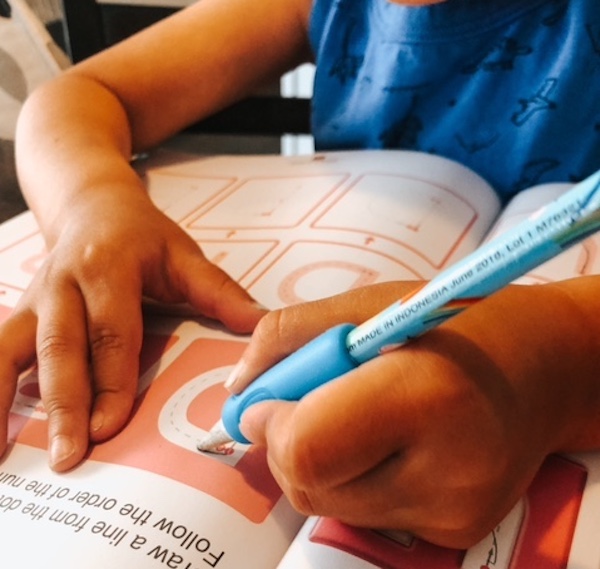
    Our children spend six and a half hours a day in school. For those who are not mathematically inclined, that’s over thirty hours a week. That is a lot of time to be learning and growing and evolving without parents truly knowing the specifics of what happened in the day. And yet, we are often left wondering how we can do more at home, and support what is being taught. Are they grasping concepts? With the learning lag of online school still very much at the forefront, many parents are worried that they need to provide extra attention to learning, These questions are magnified by not really knowing what our children are doing during the day. What ARE they learning? What concepts are being covered? When the typical response to “what did you learn today” is either “I don’t know” or “stuff”, how can you even be effective?

    As a teacher, one of the most frequently asked questions is how to support children at home. Let it be said that I definitely don’t have all the answers. I do know that parents typically fall into one of two categories; those who are over-involved and those who are under-involved. Why is that the case? Because as we know with everything else in life, striking a balance is next to impossible. So why should supporting our children’s education be anything different?

    Instead, we inherently swing towards one of the extremes and wonder how to ease off the gas a bit more. I wanted to provide some basic tips and tricks for how to support children. These are things that teachers wish parents knew, and are easy to implement. The best part is that you don’t need to know what concepts are being covered to start!

    Everything starts at home, the night before. We have all heard of the importance of a good night’s sleep and I’m sure that many of you have bedtime routines down pat at this point… I’m certain more so for parental sanity than well-rested children wink. What I am referring to is before bedtime. In an effort to engage our children, many of them are over-programmed. Extra-curricular activities are important, don’t get me wrong. However, having a different activity every night of the week is a LOT. Every child is different, and where some can handle only one activity per week, others may be able to handle more. It’s important to remember that having multiple commitments can cause anxiety in children. I have had many conversations with students who have said they are unable to complete things at home or feel that they have too much going on because they have activities almost every day. This is a prime example of the importance of open dialogue between children and parents. This is not to say that the child who does not want to practice piano (cough cough my own child) gets to opt-out, but we do discuss the number of weekly commitments together.

    The use of an agenda is a fabulous tool. When our children are young, they are a great way to communicate with the teacher or vice versa. This helps to cut down on the unknowns of the day. When children are older, it is a great time-management tool. Unfortunately, many schools have paused the use of agendas due to Covid, as they try to minimize the items going back and forth from school. If you already have an agenda system in place, make sure to use it, and model for older children (grades 3+) how it can be helpful. Reviewing the agenda daily, and initialling it so that teacher can see you have read it is an easy start. If there is no agenda system in place, reach out to the homeroom teacher and see what the best form of communication is for weekly reminders, special days and upcoming assignments and assessments. This may look like a virtual newsletter, an email system, or even a virtual classroom. Don’t leave it to your child to tell you where to find the day-to-day information. That being said, no matter what the system, please do not expect the teacher to record verbatim what has happened in the day, as that is just not feasible.

    Reading at home is so important. This can be a bit of a no-brainer in theory but can be difficult to tackle in practice. When our kids are younger, we often read together with them; help them sound out the words or look for picture clues. As children get older and are more independent, parents do not always know the books they are reading (I mean, has anyone really had the time to pick up the most recent DogMan book??). This begs the question – how do you support reading? The good news for parents is that as students enter the end of primary and into junior grades, reading is more about explaining your understanding and less about your oral fluency. Talking about reading at home is the number one tip I give all parents of the students I teach. This means we need to talk about reading with our children, and always encourage them to support their thinking. These mini conversations can take place in the car on the way to school, at the dinner table, or right before bed. They do not have to be formal assessments.

    Simply ask what their favourite part is so far, what they think is going to happen next, or which character is they can relate to the best and then ask WHY. This is an area of need for all children (and especially gifted thinkers). Encouraging children to give more than a one-word answer, and think about supporting their thinking will give them a leg-up not just in literacy but in all subjects. I recognize that this assumes our children actually read at home, which I know many do not. The good news is that these conversations can be about any subject (space, chocolate cake, or Pokemon) – the key is in the WHY.

    The last point I want to cover is to ask children how they are feeling. This year, more so than others, brings with it a lot of anxiety. Whether children are back in the class, still online, or back and forth, there are a multitude of feelings. Taking time to ask children how they are doing, and giving them both the tools and the outlets to truly express it are imperative. I can tell you that 99% of children will not just walk up to a parent and articulate perfectly how they are feeling (nor would 99% of adults for that matter). Asking children to journal, mindmap, or colour a picture of their day are all ways that can help you understand how they are doing without a formal conversation. Check-ins will help gauge how they are doing with all the changes and uncertainty of the year. Just as our mental health is important, so is theirs. As they cannot necessarily advocate for themselves it is our job to ask questions to help them process. If there is interest, I can definitely go into this more in a later post.

    The only thing you definitely cannot do is read minds. Although we may want to, we cannot be flies on the wall in the classroom. Even as a 4th-grade teacher with a child in a grade 4 classroom, I STILL don’t know what she is doing on the daily. We all struggle with this. We will never know exactly what happened in the day but we can try to give children some tools to help them get through, And trust me, your child’s teacher will thank you. I know I would.

    This is life. Love, Mom.
  • Inhale The Future, Exhale The Past

    Inhale The Future, Exhale The Past

    About two months ago, I began a journey to become a certified yoga teacher. Yoga has been a part of my life for more than 10 years. When I was pregnant with J, yoga was one of the only forms of movement I could tolerate. When Covid hit, J and I would do yoga together in the evenings to wind down. Although it eventually lost its appeal for her, I ramped up my own practice. I enjoy the peace and calm it brings me amidst the chaos. So when my best friend told me that she was going to work towards her certification, it appealed to me. We decided to do it together, as best friends do. I knew I loved the poses and active movement involved, so why not learn more about the history and origins?

    What I didn’t realize is just how much the breathwork and meditation components would mean to me. Mindfulness is such an important part of good mental health, as is an awareness of one’s self. I love that you don’t need tools for the breathwork – it is the most portable form of self-care. Many people are intimidated by the quiet and metered breathing. There is a misconception that it is time-consuming and you must sit in silence for an extended period of time.

    So for my first yoga-inspired post, I wanted to share the ways that I incorporate breathing and mindfulness in my day, to show that it can be easier than you think. Breathing is something we need to do. Our bodies manage it without us thinking about it. But when we are stressed, anxious or tired our breathing innately becomes more shallow. Scientifically this is because our body stops relying on the diaphragm to breathe. In yoga, the prana (or life force) is brought into the body with our breath. Being aware of it and harnessing it is a huge source of power and strength. I am here to share with you some of the ways I am mindful and practice “pranayama” (Sanskrit for the regulation of breathing) in a real-life go-go-go setting.

    ONE: Be present. This doesn’t mean you have to be present at every moment of the day. One of the biggest yoga gurus, Richard Rosen, talks about taking in the small moments of the day. We don’t do anything specific, but instead, do nothing and just observe. I find when I am taking the dog for a walk in the morning, or sitting in my car at a red light, I take 30-60 seconds and become very aware of the moment. I really take in all my senses – what do I hear? Smell? See? Just taking that time to come out of my head and into the moment can be very powerful. Think of it as a quick mental reset.

    TWO: Take deep breaths. I find when I’m stressed (and let’s be honest, that is often!) practicing equal-part breath helps me to focus. Equal-part breath is one of the core breathing techniques in yoga and it is easy to access. If you find it helpful and safe, you can close your eyes. I typically do this while I’m driving and the kids are yelling at each other, so my eyes would NOT be closed. Empty your breath, and breathe in slowly for a count of 3-4, depending on what you can do. Then exhale for the same amount of time. If this is difficult you can try just inhaling slowly and exhaling your normal breath. But, ideally, you are focusing on breathing in and out equally (hence equal-part breathing). The focus becomes your breath and not whatever is stressing you out. Again, this doesn’t have to be something you do for 30 minutes. Even a few rounds of breathing can be calming.

    THREE: Take five. When we think of meditation, we think of a quiet mind without any distractions. We think of a group of people sitting in a room, with eyes closed and all humming in unison. In reality, meditation is what you make of it. When you are feeling overwhelmed, try this. Just sit down (on the floor, at your desk, on your bed) and listen. Instead of trying to turn everything off around you, just sit and experience it. Listen to the sounds around you instead of trying to tune them out. Are people talking? Birds chirping? A car horn blaring? Feel your body instead of trying to ignore it. Is your skin hot or cool? Is your stomach grumbling? Then focus on your breath… not trying to control it, but just listening and feeling how it moves. Even five minutes of this can be transformative.

    My hope after reading this is that you can see that mindful breathing is much more accessible than we fear it is. There is indeed an entire practice dedicated to learning to meditate and breathe more successfully – but that is just it – it’s a PRACTICE. In our crazy busy lives, even taking five minutes to be present in our bodies and minds can be helpful. And at the end of the day, five minutes is better than nothing!

    This is life. Love, mom.

  • Where Did I Land My Helicopter?

    Where Did I Land My Helicopter?

    As cliche as it sounds, there is nothing harder, yet more fulfilling than being a parent. There are so many times I pinch myself, wondering who gave me the responsibility of raising children. Not that I’m not capable, but to some extent we were children, and now we are responsible for our own children. So many parents lament “if only there were a handbook…..” or wonder if they can google “how to raise my kids”. It can be hard to find yourself in the ebb and flow of parenting. Not to mention, what is good for one child is rarely the same for the next. There needs to be a balance between being the “helicopter” parent and letting our children just figure things out on their own. Neither at its extreme is helpful or rational, but it isn’t easy to find that middle ground. There is nothing we want more than to keep our kids safe, and to have them become good humans…. but how we get there is a bit of a mystery. We know the final destination, but the roadmap is nowhere to be found.

    No one would argue that being a helicopter parent is a good idea, for both the parent and the child. In case you are not familiar with this term, a helicopter parent does not let their child out of their sight. The constant micromanaging, worrying, hovering over your child, and keeping them close is not ideal. The fear is that they will be hurt, or put in a dangerous situation. So the antidote is to ensure that you are constantly there to protect them. However, in doing so it leaves little room to allow them to make mistakes.

    It also makes transitions to school and programs quite difficult (usually more so for the parent than the child). As much as we want, we cannot go through life holding their hands, or encasing them in bubble wrap.

    And to be clear, the opposite is no better. The idea that children should simply learn by experiencing life, and from their mistakes is fraught with issues, as well. Yes, children should learn life lessons, and get the bumps and scrapes that come with growing up. As a teacher, I can appreciate that learning certain skills on your own is much more valuable than having them explained to you. Coming to understand the world through natural consequences is indeed important. Working through experiences, building resilience, and figuring out right from wrong are all invaluable lessons. But, by being completely hands-off, children lose the attachment to parental figures that is so important. And the question is – are we putting them in unnecessary situations? Are they learning lessons they shouldn’t need to learn? The argument becomes if we CAN protect them, why shouldn’t we?

    With all this back and forth swirling around in our heads, and the whispers of every parenting expert in our ear, what is the answer? What path will yield the best result? All we know is we want our children to be the best they can be; to grow up to be good, self-sufficient, kind human beings. As mothers, there is an inherent fear that we are constantly messing up our kids. I myself am guilty of this, as well. Decisions are met with self-doubt, questioning, and rationalization. Should I have let them do their own thing? Did I not step up enough? Was the best decision made for the situation? These questions are coupled with the nagging notion that each decision holds more weight than it truly does. As if we are one decision away from permanently messing up our children. Of course, in hindsight, this is rarely the case, but it doesn’t feel like that at the time.

    Interestingly, before I had children I often thought I would be more relaxed (I mean, didn’t we all??). I didn’t think I would be so worried all the time – specifically about the kids hurting themselves or becoming ill. And yet, here I am. I want them to be good, do good, and feel good. I want them to stand up for themselves and be respectful. I want them to be safe and secure. But I struggle with how best to execute this. I have had my “helicopter” moments, and let me tell you there are more of them than I’d really care to admit. The idea of them falling (either proverbially or physically) and not being there to catch them is daunting. I know that this feeling was heightened when J became very ill and was hospitalized at 2 years of age. I won’t get into it now, but I will in future posts. There is a delicate balance between keeping them safe and allowing them the opportunity to learn on their own, and admittedly I don’t know the formula.

    So can you imagine what happens when you throw Covid into the mix? The mystery that has plagued communities for the better part of two years has sent us all into hyperdrive trying to protect our children. Teaching them to wear masks, sanitize their hands, sneeze into their elbows, and inform adults when the sniffles are “just allergies” (when they truly are, of course!) has taken over our lives. We are left with the question, how can we protect our children if we haven’t yet figured out how to protect ourselves? Yes, we are making headway, but there is still a ways to go. Now let’s be clear – I am not using this platform to delve into the vaccine or mask debate. There is too much there to unpack, and I don’t think a one-off blog post is a place to do it. But, of course, these are other questions that are constantly top-of-mind. The whole situation would send any sane parent into overdrive, wondering how best to ensure their child’s safety.

    These are thoughts that continue to plague me, especially since September is already here. Maybe that’s part of the balance I struggle to find as a parent. What I DO know is that Covid has hit those who question their parenting, who don’t want to hover but cannot bear to look away… This is not to say that we have all had our own struggles because of this pandemic. But as we enter another school year, I know that the parents I talk to are all worried about the same thing – how can we keep them safe when we can’t see them all day? How do we keep them healthy when we have no control over the environment they are in? There is an element of letting go that is involved in sending our children off to school that is difficult to grasp – even for parents who are more hands-off than the rest.

    If I’m being candid and honest, I’m not entirely sure what I want to impart in this post. I began writing this because I wanted to grapple with my babies returning to school, and the extra layer that Covid has added. Having been home last year altogether, sending them out into the world again is frightening. I want them to have the most normal of experience in what is the most abnormal of circumstances. All the while, I want to keep them safe. So when I find my helicopter, we can all jump in together and hover over our children. At least for the near future until we can see the light at the end of this very dark tunnel.

    But this is life. Love, Mom

  • These Are Five Of My Favourite Things…

    These Are Five Of My Favourite Things…

    *Fall Edition*

    Thank you to everyone who gave me feedback on my first “favourite things” blog. If you know me, you know that I love summer. I don’t mind the heat, and I crave the vitamin D. Seeing as how I am not into sports, winter is definitely not my jam. BUT from a fashion-standpoint, fall is where it’s at. There is something so appealing about the crisp air, jeans, fall boots and a warm latte that soothes my soul. So, in honour of the upcoming season, here are my top five favourite fall things.

    NUMBER 1: Pumpkin spice lattes. I know, I know. These are typically reserved for those who are “basic”, whatever that means… Pumpkin spice is very polarizing… either you love it or you despise it. I just love how Starbucks somehow figured out how to corner the market on a whole season. Somewhere along the way, the return of the Starbucks fall line-up became the unofficial signal of fall. Whoever is behind that marketing should surely get a raise. This flavour phenomenon has morphed into everything from cereal to hummus to cream cheese. But I’ll just stick with my original PSL, thank you very much.

    NUMBER 2: Apple picking – the quintessential fall outing. I have to admit I have always loved this. There are so many orchards in and around the GTA, making this a very accessible activity. I know it sounds cheesy, but there is something magical about walking through the orchards and taking the fruit right off the tree. It is a great socially-distanced activity that is great for all ages. There really isn’t anything more to say!

    NUMER 3: I have to say one of my favourite things about early fall is opening the windows. For fellow seasonal allergy suffers, you can appreciate why the windows must stay closed most of the summer. Not to mention the outside heat messes with our AC. But fall air lets the house “breath” more. It lets the outside in and doesn’t feel as stuffy anymore. Even though as I mentioned above, summer is numero uno for me, fall is a close second, for the feeling of the air alone!

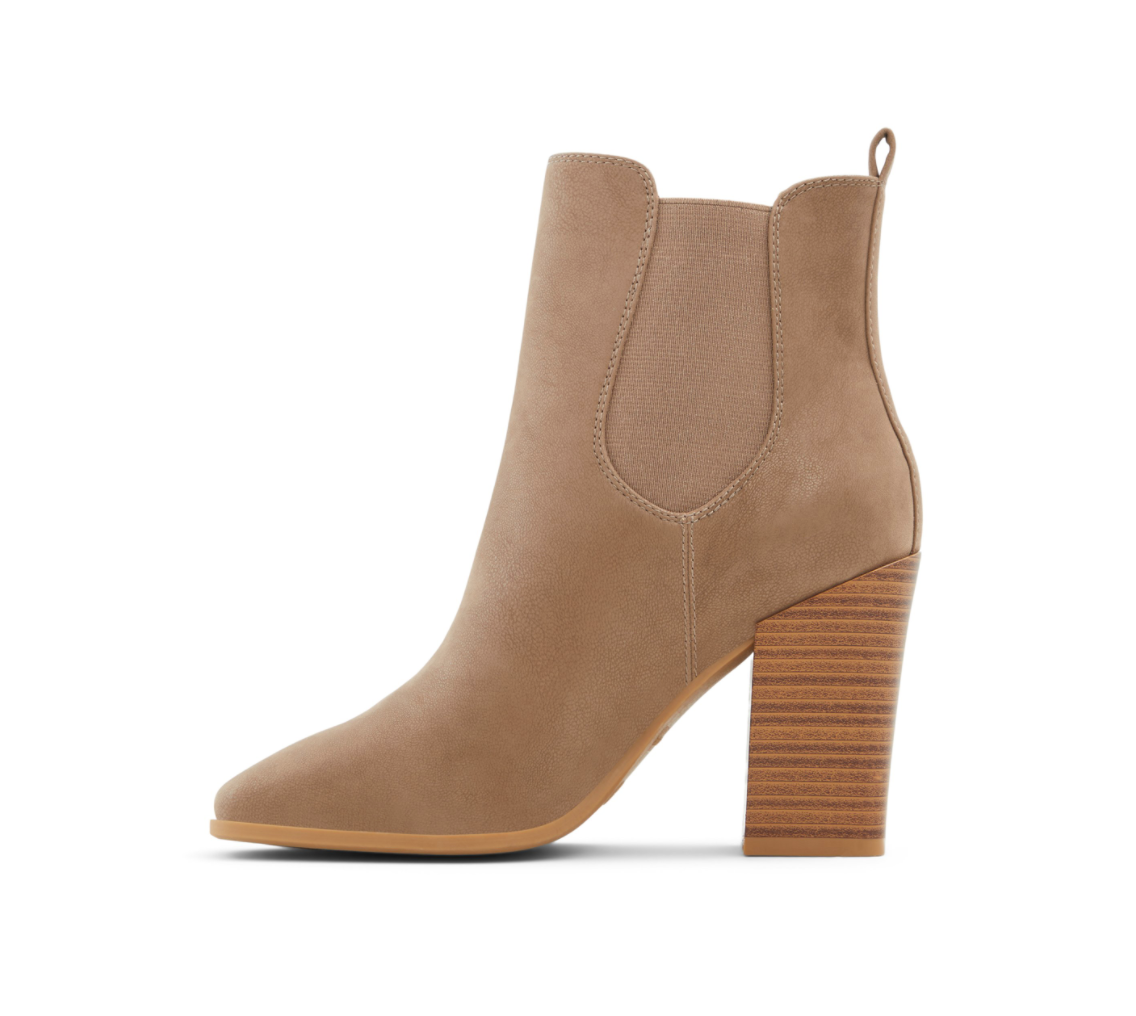
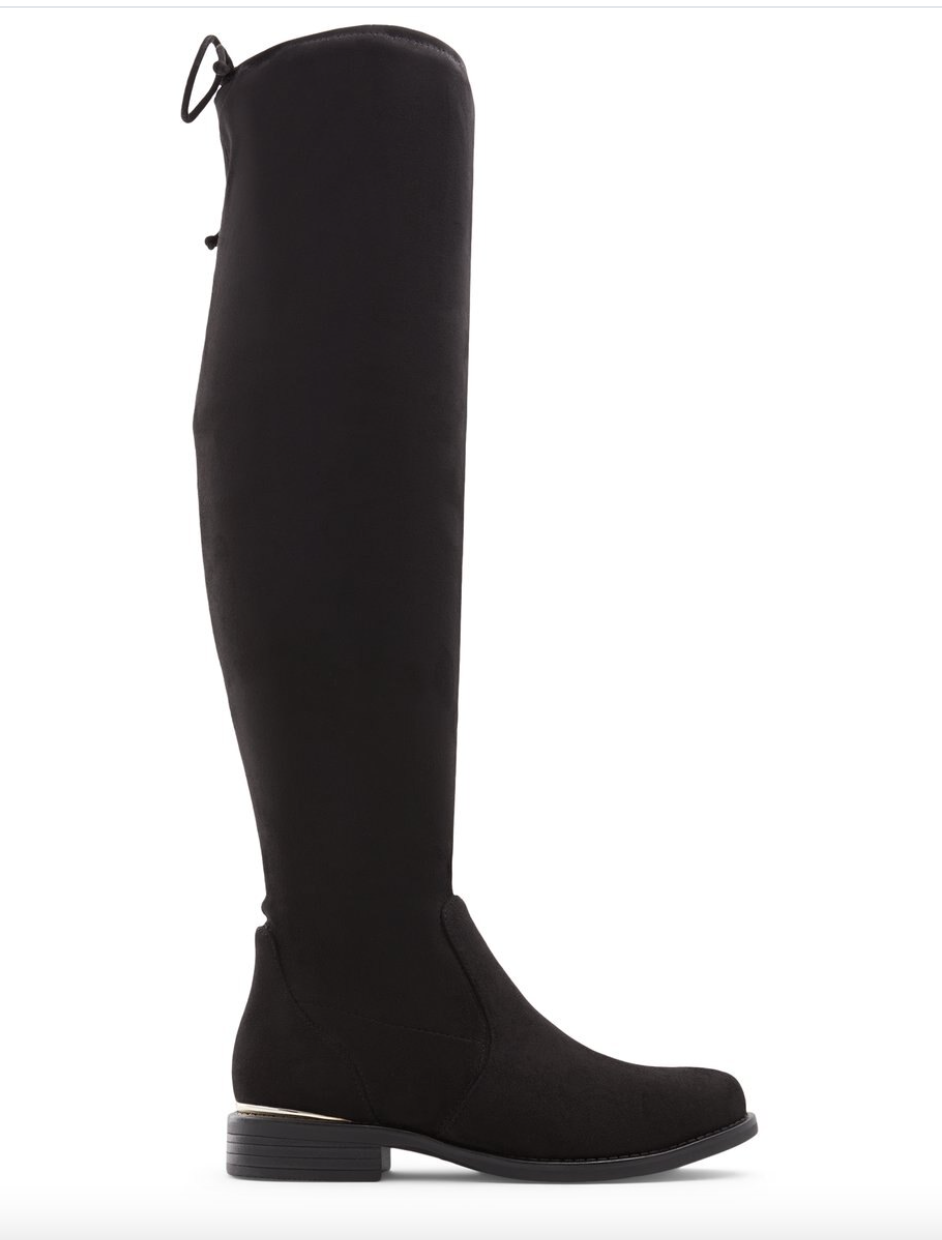
    NUMBER 4: Here is my one fashion plug. I am obsessed with boots. Hubby laughs at all my shoes, but truthfully fall boots are my weakness. A few years ago, a colleague of mine commented she loved the “click-clack” of my heels, and she always knew it was me coming down the hall. If you haven’t ventured to Call It Spring (a subsidiary of Aldo) lately, I highly suggest you go. This is NOT a plug, but they actually make the best boots… just ask my wallet. I wracked my phone looking for pictures of me wearing some of my faves, but alas I guess this goes to show how poor of a fashion blogger I am because I have none (ha!). Instead, I have picked my faves off the websites and highlighted them here for you. If anyone wants to send the link to Hubby, I can pass his email along wink. Here is the link in case you need a quick boot-fix https://www.callitspring.com/ca/en

    NUMBER 5: Baking is one of my favourite things to do all year round, but there is something about fall baking that just hits differently. Maybe it’s the cool air or the hot coffee you can drink while enjoying a little something. I generally try to add a healthier twist to my baking, which has become a bit of a running joke in our house. Whenever I bake anything, J asks if it’s “normal or mommy-baking” and when Hubby eats it, he then asks “okay so what’s really in it?” But even though they joke, they also know that I am trying to give them a healthier option. Don’t get me wrong, I buy store-made items too because I don’t have time to sit in the kitchen all day. But when I DO bake, I want to make sure there is a little something extra. If you don’t follow The Ambitious Kitchen on Instagram, I highly recommend you do. I am a huge fan of her recipes because they taste AMAZING and are health-conscious. Her peanut butter Twix bars have been made dozens of times in our house. I am linking the recipe from her site here: https://www.ambitiouskitchen.com/healthy-peanut-butter-twix-bars/

    I hope you enjoyed this “fluffy” post! I do enjoy sharing things I love, so these are fun posts for me to write. What are your favourite fall things? Share, please! But if this post wasn’t your thing, don’t worry, it will be back to our regularly scheduled programming next week 🙂

    This is life. Love, Mom.

  • When Your Worst Fears Are Realized

    When Your Worst Fears Are Realized

    This post comes with a trigger warning. I am about to discuss when a child gets sick – every parent’s worst fear. I wish what I was writing was fiction, but it is our reality.

    The fall after my daughter turned two, she developed a crazy high fever. I remember she was hot and flushed, and we weren’t sure why. We couldn’t figure out what it was, and doctors threw out guesses like a virus, fifth’s disease and strep throat. She had countless tests that week and two walk-in visits. Tylenol and Advil weren’t helping but we kept at it for a few days. We waited and monitored and prayed that the fever would break. A few days in, she developed a rash on her hands and feet. Since her fever was so high, we thought it might have been a fever rash. I have a very distinct memory of sitting by the bath, looking at her feet, and being completely bewildered by it. By Friday, 5 days in, things hadn’t changed so we went back to the walk-in. By that point, her eyes had started getting very red. The doctor took one look at her and told us he was sending us to the emergency room. He said that he suspected Kawasaki disease but it needed to be confirmed by the hospital. At that time we were familiar with the disease because Hubby’s nephew experienced it a few years earlier (and made a full recovery), but we were still awestruck and shaking.

    The next week and a half were a whirlwind that I will never forget. We started at one hospital closer to our house, but quickly made the decision to drive downtown to Sick Kids Hospital. The drive down was a mix of panic and fear. I remember that it was dark outside and my first thought was that she was supposed to be in bed by then. When we go to the ER, she was almost immediately diagnosed with Kawasaki’s Disease – a very rare inflammation of the small blood vessels, characterized by a very high fever, and red palms, feet, tongue and eyes. The danger with the disease is that the vessels around the heart also become inflamed, which could lead to coronary failure, and if not treated immediately would be fatal. It must be treated in the first week to reduce these symptoms. Let me tell you – Dr. Google is NOT your friend in these times. While we were waiting to be admitted, we did our own research and read all about the countless children who were left untreated and died from coronary failure. This only fueled the anxiety and panic.

    Early in the morning on day 6, she began the treatment. The typical treatment is an infusion of IVIG (intravenous immunoglobulin) to help her body fight the infection. The typical course of treatment is half a day of infusion, followed by 24 hours fever-free. Unfortunately, she developed an allergic reaction to the infusion with her fever spiking, so they had to stop it less than an hour in. The secondary course was a synthetic IVIG alternative that works the same way but requires more than double the time to administer. We waited, patiently while she received the dose and prayed. Once it was administered, the clock began for our 24 hours fever-free. All seemed to be going well, until the 20th hour when her fever spiked higher than ever, right smack in the middle of the night. I won’t go into specifics but I will tell you that was the worst night of my 38 years of life. The second round of synthetic IVIG was ordered, and her fever began going down. Then, thankfully, she passed the 24-hour mark without fever. Then she passed her cardiac function tests. After a week in hospital, she was released to go home with an Asprin regimen and two very nervous parents.

    After her follow-up a year later, she was released from the hospital’s caseload and we finally felt like we could breathe again. We thank God every day that she does not have any lasting heart defects, as many children do. So many children die or suffer life-long issues as a result of this disease. We are forever grateful that neither of these is the case. Having a hospital like this in our backyard, especially one that has a dedicated Kawasaki’s clinic, was the greatest gift. I tell you all of this, so you can understand why Sick Kids Hospital means so much to me. So when I tell people that they saved her life, I am not being dramatic – it is the truth.

    As a teacher, working with Heart and Stroke on their Jump Rope for Heart campaign is incredibly important to me (hence the picture from a couple of years ago pre-Covid). But more than that, I do whatever I can to help Sick Kids Hospital, and encourage my kids to do the same. Toys, money, or gifts for the nurses in the cardiac ward – any way we can show our appreciation even seven years later. Because, for me, those seven years still feel like yesterday. In a blink of an eye, we are back there, holding her hand, crying together, and praying.

    This month I am participating in the Get Loud campaign for Sick Kids. They are looking to build a bigger hospital, to be able to help even more families. All September long, I am cycling, walking and lifting in honour of this campaign. If this post has struck a chord with you, I urge you to consider helping my campaign. Sick Kids Hospital is the ONLY organization I would ever ask for donations for.

    And in the meantime, I will continue to be thankful for the gift that we have received – the gift of life for our family and J. I pray that others in our situation have the same outcome. Hug your babies, everyone.

    This is life. Love, Mom.
  • Mix and Match Granola

    Mix and Match Granola

    I have always loved granola. There is something about it that is crunchy and satisfying no matter what is in it. For a long time, I was very intimidated to make my own. I think it was a combination of not wanting to ruin a food I loved, and not finding the right recipe. So many of the recipes I have found online are either “no-bake” (which doesn’t give the same crunchy texture), or full of processed sugars (which are great in some recipes, but not in my morning granola). Well low and behold, I happened across the BEST granola recipe. The first time I made it was for a staff breakfast. I doubled the recipe and was SO glad I did because it went FAST. My favourite part is that I can literally throw whatever I have in the pantry into the mix, and it always turns out great. The original recipe is from The Seasoned Mom (https://www.instagram.com/theseasonedmom) but I have made some little tweaks of my own.

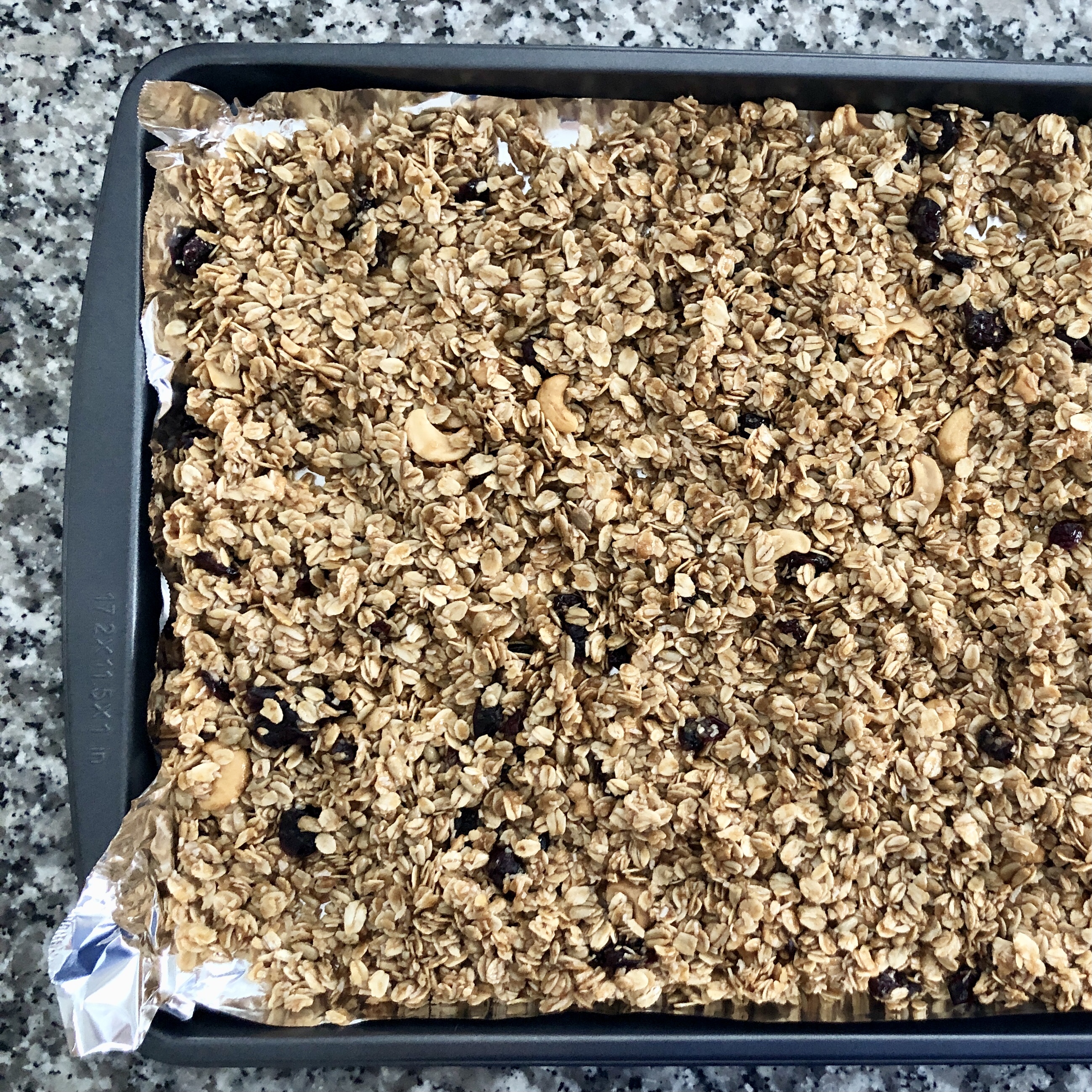
    Pictured above: granola with unsalted sunflower seeds, cashews and almond butter

    Ingredients

    • 4 cup old-fashioned oats (make sure they are not quick-cook)
    • ¾ cup wheat germ
    • 1 t. salt
    • ¼ cup coconut sugar
    • ½ c. maple syrup
    • 2 tbsp natural peanut or almond butter
    • ½ cup coconut oil
    • ½ tsp cinnamon
    • ½ tsp vanilla extract
    • ½ cup dried cranberries
    • ¼ – ⅓  cup mix-ins (see below for ideas)
    • ½ cup shredded, unsweetened coconut

    Instructions

    1. Preheat oven to 325 degrees F.
    2. Line a pan with aluminum foil and spray with cooking spray. I like to use a coconut oil spray.
    3. In a large bowl, stir together oats, wheat germ, cranberries, coconut and mix-ins. TIP: Pick a bowl you think will fit the ingredients, then use the next size larger. Trust me, when you are stirring everything together you’ll thank me.
    4. In a small saucepan, mix together salt, sugar, maple syrup, coconut oil, nut butter, cinnamon, and vanilla. Heat until it is all melted and smooth.
    5. Pour the “sauce” over the dry ingredients and stir well. Make sure all the dry is coated with the wet ingredients. Then, spread onto the pan to bake. TIP FROM THE ORIGINAL AUTHOR: Use a wooden spoon to gently press together clumps of the oats to get those great crunchy clusters at the end!
    6. Bake for 15-20 minutes, stirring halfway through, then pressing down with the spoon again before returning to the oven
    7. Remove from the oven, and press down with the wooden spoon again to form those clusters, and allow to cool completely before storing granola in an air-tight container. I typically store it in the fridge to keep it fresh, but it can also stay on the counter for about 2 weeks (although ours always gets eaten before that).

    Things To Note:

    • If you’re like me, you have never purchased wheat germ before. It is very easy to find, usually in the breakfast aisle of the grocery store. It is also a necessary ingredient for adding texture and fibre to the granola. Make sure to store your opened wheat germ in the fridge!
    • You can use brown sugar and/or honey instead of the coconut sugar and maple syrup based on your taste preference. I would not recommend white sugar here
    • Feel free to sub out the nut butter with a seed butter or even Wow Butter (I have done both for a school-safe alternative)
    • This can easily be made nut-free for school by adding more oats, fruit, or seeds as the mix-ins (the original recipe was meant to be nut-free)
    • Let me tell you, the mix-ins are where it’s at! I have used everything under the sun! Sunflower seeds, pumpkin seeds, pistachios, cashews, slivered almonds, chia, or this PC Super Seed Mix (https://www.presidentschoice.ca/product/pc-ancient-grains-and-er-seeds-blend/21024184_EA) Truth be told, it’s usually whatever nuts I have in my pantry that I want to get rid of.
    • You can sub out the cranberries for raisins or another dried fruit. I’m sure dried papaya or mango would be great! Or you can just omit it completely
    • Keep in mind, the more mix-ins you add, the “drier” the granola will be as there won’t be enough sauce to glue it together. Sometimes, I get overzealous and add too many extra things. The granola will still taste great, but you won’t get those crunchy clusters.

    I can’t wait to see your granola creations! Tag me on Instagram, or comment with your favourite combo. Let’s mix and match, together!

    This is (a delicious) life. Love, Mom.