Tag: momblogger

  • How To Be A Partner In Education Even If You Aren’t A Mindreader

    How To Be A Partner In Education Even If You Aren’t A Mindreader

    Our children spend six and a half hours a day in school. For those who are not mathematically inclined, that’s over thirty hours a week. That is a lot of time to be learning and growing and evolving without parents truly knowing the specifics of what happened in the day. And yet, we are often left wondering how we can do more at home, and support what is being taught. Are they grasping concepts? With the learning lag of online school still very much at the forefront, many parents are worried that they need to provide extra attention to learning, These questions are magnified by not really knowing what our children are doing during the day. What ARE they learning? What concepts are being covered? When the typical response to “what did you learn today” is either “I don’t know” or “stuff”, how can you even be effective?
    As a teacher, one of the most frequently asked questions is how to support children at home. Let it be said that I definitely don’t have all the answers. I do know that parents typically fall into one of two categories; those who are over-involved and those who are under-involved. Why is that the case? Because as we know with everything else in life, striking a balance is next to impossible. So why should supporting our children’s education be anything different?

    Instead, we inherently swing towards one of the extremes and wonder how to ease off the gas a bit more. I wanted to provide some basic tips and tricks for how to support children. These are things that teachers wish parents knew, and are easy to implement. The best part is that you don’t need to know what concepts are being covered to start!

    Everything starts at home, the night before. We have all heard of the importance of a good night’s sleep and I’m sure that many of you have bedtime routines down pat at this point… I’m certain more so for parental sanity than well-rested children wink. What I am referring to is before bedtime. In an effort to engage our children, many of them are over-programmed. Extra-curricular activities are important, don’t get me wrong. However, having a different activity every night of the week is a LOT. Every child is different, and where some can handle only one activity per week, others may be able to handle more. It’s important to remember that having multiple commitments can cause anxiety in children. I have had many conversations with students who have said they are unable to complete things at home or feel that they have too much going on because they have activities almost every day. This is a prime example of the importance of open dialogue between children and parents. This is not to say that the child who does not want to practice piano (cough cough my own child) gets to opt-out, but we do discuss the number of weekly commitments together.

    The use of an agenda is a fabulous tool. When our children are young, they are a great way to communicate with the teacher or vice versa. This helps to cut down on the unknowns of the day. When children are older, it is a great time-management tool. Unfortunately, many schools have paused the use of agendas due to Covid, as they try to minimize the items going back and forth from school. If you already have an agenda system in place, make sure to use it, and model for older children (grades 3+) how it can be helpful. Reviewing the agenda daily, and initialling it so that teacher can see you have read it is an easy start. If there is no agenda system in place, reach out to the homeroom teacher and see what the best form of communication is for weekly reminders, special days and upcoming assignments and assessments. This may look like a virtual newsletter, an email system, or even a virtual classroom. Don’t leave it to your child to tell you where to find the day-to-day information. That being said, no matter what the system, please do not expect the teacher to record verbatim what has happened in the day, as that is just not feasible.

    Reading at home is so important. This can be a bit of a no-brainer in theory but can be difficult to tackle in practice. When our kids are younger, we often read together with them; help them sound out the words or look for picture clues. As children get older and are more independent, parents do not always know the books they are reading (I mean, has anyone really had the time to pick up the most recent DogMan book??). This begs the question – how do you support reading? The good news for parents is that as students enter the end of primary and into junior grades, reading is more about explaining your understanding and less about your oral fluency. Talking about reading at home is the number one tip I give all parents of the students I teach. This means we need to talk about reading with our children, and always encourage them to support their thinking. These mini conversations can take place in the car on the way to school, at the dinner table, or right before bed. They do not have to be formal assessments.

    Simply ask what their favourite part is so far, what they think is going to happen next, or which character is they can relate to the best and then ask WHY. This is an area of need for all children (and especially gifted thinkers). Encouraging children to give more than a one-word answer, and think about supporting their thinking will give them a leg-up not just in literacy but in all subjects. I recognize that this assumes our children actually read at home, which I know many do not. The good news is that these conversations can be about any subject (space, chocolate cake, or Pokemon) – the key is in the WHY.

    The last point I want to cover is to ask children how they are feeling. This year, more so than others, brings with it a lot of anxiety. Whether children are back in the class, still online, or back and forth, there are a multitude of feelings. Taking time to ask children how they are doing, and giving them both the tools and the outlets to truly express it are imperative. I can tell you that 99% of children will not just walk up to a parent and articulate perfectly how they are feeling (nor would 99% of adults for that matter). Asking children to journal, mindmap, or colour a picture of their day are all ways that can help you understand how they are doing without a formal conversation. Check-ins will help gauge how they are doing with all the changes and uncertainty of the year. Just as our mental health is important, so is theirs. As they cannot necessarily advocate for themselves it is our job to ask questions to help them process. If there is interest, I can definitely go into this more in a later post.

    The only thing you definitely cannot do is read minds. Although we may want to, we cannot be flies on the wall in the classroom. Even as a 4th-grade teacher with a child in a grade 4 classroom, I STILL don’t know what she is doing on the daily. We all struggle with this. We will never know exactly what happened in the day but we can try to give children some tools to help them get through, And trust me, your child’s teacher will thank you. I know I would.

    This is life. Love, Mom.

  • Fri-ta-tta, Fri-tah-tta

    Fri-ta-tta, Fri-tah-tta

    I *may* have mentioned once or twice that breakfast for dinner is a go-to in my house. We love eggs, since they work so well for fast, easy suppers, and will be eaten by both picky N and pescatarian J. Frittatas are the best dish for throwing in whatever you have in the fridge and getting rid of the odds and ends. It’s also a great way to get veggies into children who think you are not a parent but a line-cook.

    My best tip is to invest in a cast-iron skillet. They are not as pricy as you may think. Here is a non-affiliate list of options from Amazon: https://www.amazon.com/s?k=cast+iron+skillets&crid=20L868YPHXYO9&sprefix=cast+iron%2Caps%2C191&ref=nb_sb_ss_ts-doa-p_2_9 The cast iron makes the stove-to-oven action super easy. It also makes the egg super crispy (aks super delicious) on the edges. There is one simple thing you have to remember about cast iron. Under NO circumstances do you use soap to wash it. To clean, you can boil some water in the bottom of the pan or use salt as an abrasive to get the bits off the bottom. Then coat with oil before you put it away and it will be ready for the next time!

    So back to the egg-cellent recipe…. Here is the frittata base (mix the following all together):

    • 6 eggs
    • 1/4 cup milk
    • 1 garlic clove (or 1/2 tsp minced garlic)
    • 1/4 tsp salt (less if using a very salty cheese or meat)

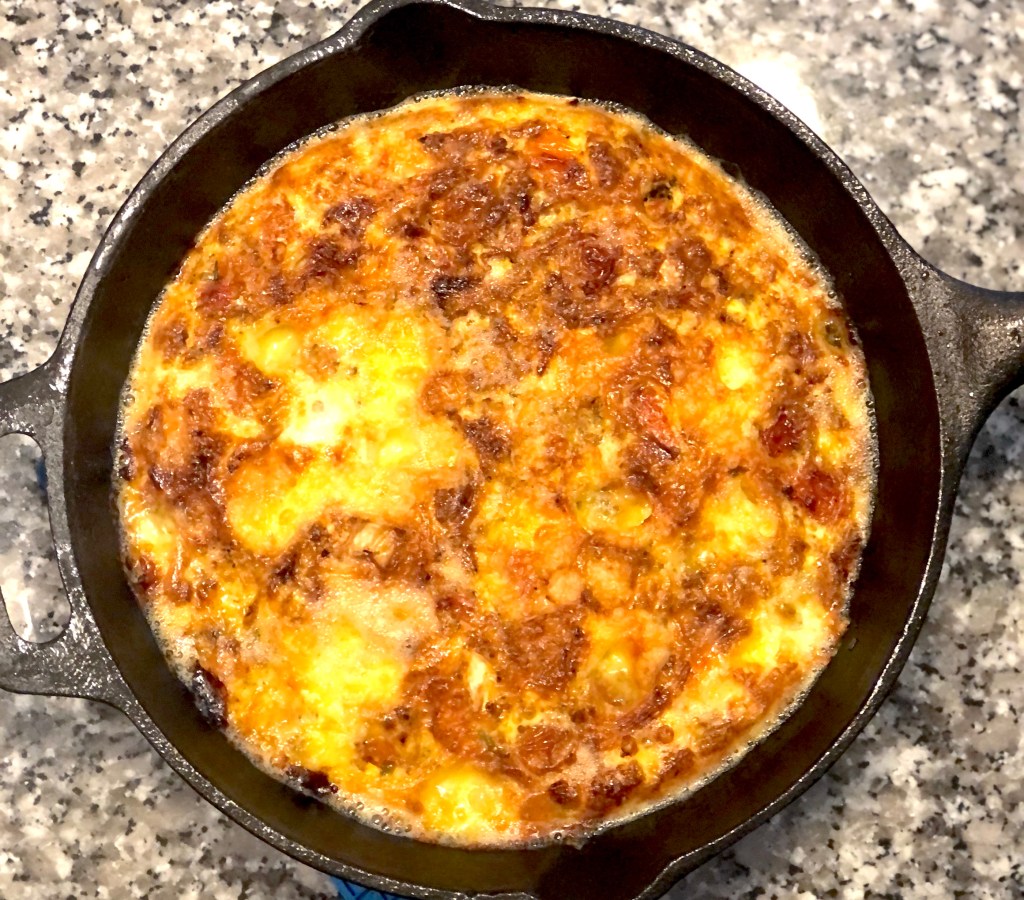
    The best part, as always, is what you can mix in. In the photo on the left I have cherry tomatoes, brie, and zaatar seasoning. Not sure what to put inside? Here are some combinations ideas:

    • spinach and fontina cheese
    • bacon and cheddar cheese
    • peppers and onions
    • broccoli and white cheddar
    • sausage and peppers
    • salami
    • chicken and goat cheese
    • tomatoes and basil
    • mixed cheese
    • caramelized onions and swiss cheese

    Simply put your mix-ins at the bottom of the pan (minus any cheese) and cook them slightly. This is especially important for vegetables that hold a lot of water, such as spinach and broccoli. Otherwise, the eggs won’t set properly. Make sure there is enough oil in the pan so the eggs won’t stick, and pour the egg/milk mixture on top. Ensure the ingredients are all over the pan instead of in just one place. Top with the cheese. Bake at 400º for about 15-20 minutes. If you find the cheese is burning you can always lightly cover the pan with some tinfoil for part of the cooking time.

    Pictured right: Spinach, mushroom and an Italian 4-cheese blend

    I would love to know what you would put into your frittata! Share your combinations here for all to enjoy.

    This is life. Love, Mom.

  • Inhale The Future, Exhale The Past

    Inhale The Future, Exhale The Past

    About two months ago, I began a journey to become a certified yoga teacher. Yoga has been a part of my life for more than 10 years. When I was pregnant with J, yoga was one of the only forms of movement I could tolerate. When Covid hit, J and I would do yoga together in the evenings to wind down. Although it eventually lost its appeal for her, I ramped up my own practice. I enjoy the peace and calm it brings me amidst the chaos. So when my best friend told me that she was going to work towards her certification, it appealed to me. We decided to do it together, as best friends do. I knew I loved the poses and active movement involved, so why not learn more about the history and origins?

    What I didn’t realize is just how much the breathwork and meditation components would mean to me. Mindfulness is such an important part of good mental health, as is an awareness of one’s self. I love that you don’t need tools for the breathwork – it is the most portable form of self-care. Many people are intimidated by the quiet and metered breathing. There is a misconception that it is time-consuming and you must sit in silence for an extended period of time.

    So for my first yoga-inspired post, I wanted to share the ways that I incorporate breathing and mindfulness in my day, to show that it can be easier than you think. Breathing is something we need to do. Our bodies manage it without us thinking about it. But when we are stressed, anxious or tired our breathing innately becomes more shallow. Scientifically this is because our body stops relying on the diaphragm to breathe. In yoga, the prana (or life force) is brought into the body with our breath. Being aware of it and harnessing it is a huge source of power and strength. I am here to share with you some of the ways I am mindful and practice “pranayama” (Sanskrit for the regulation of breathing) in a real-life go-go-go setting.

    ONE: Be present. This doesn’t mean you have to be present at every moment of the day. One of the biggest yoga gurus, Richard Rosen, talks about taking in the small moments of the day. We don’t do anything specific, but instead, do nothing and just observe. I find when I am taking the dog for a walk in the morning, or sitting in my car at a red light, I take 30-60 seconds and become very aware of the moment. I really take in all my senses – what do I hear? Smell? See? Just taking that time to come out of my head and into the moment can be very powerful. Think of it as a quick mental reset.

    TWO: Take deep breaths. I find when I’m stressed (and let’s be honest, that is often!) practicing equal-part breath helps me to focus. Equal-part breath is one of the core breathing techniques in yoga and it is easy to access. If you find it helpful and safe, you can close your eyes. I typically do this while I’m driving and the kids are yelling at each other, so my eyes would NOT be closed. Empty your breath, and breathe in slowly for a count of 3-4, depending on what you can do. Then exhale for the same amount of time. If this is difficult you can try just inhaling slowly and exhaling your normal breath. But, ideally, you are focusing on breathing in and out equally (hence equal-part breathing). The focus becomes your breath and not whatever is stressing you out. Again, this doesn’t have to be something you do for 30 minutes. Even a few rounds of breathing can be calming.

    THREE: Take five. When we think of meditation, we think of a quiet mind without any distractions. We think of a group of people sitting in a room, with eyes closed and all humming in unison. In reality, meditation is what you make of it. When you are feeling overwhelmed, try this. Just sit down (on the floor, at your desk, on your bed) and listen. Instead of trying to turn everything off around you, just sit and experience it. Listen to the sounds around you instead of trying to tune them out. Are people talking? Birds chirping? A car horn blaring? Feel your body instead of trying to ignore it. Is your skin hot or cool? Is your stomach grumbling? Then focus on your breath… not trying to control it, but just listening and feeling how it moves. Even five minutes of this can be transformative.

    My hope after reading this is that you can see that mindful breathing is much more accessible than we fear it is. There is indeed an entire practice dedicated to learning to meditate and breathe more successfully – but that is just it – it’s a PRACTICE. In our crazy busy lives, even taking five minutes to be present in our bodies and minds can be helpful. And at the end of the day, five minutes is better than nothing!

    This is life. Love, mom.

  • Where Did I Land My Helicopter?

    Where Did I Land My Helicopter?

    As cliche as it sounds, there is nothing harder, yet more fulfilling than being a parent. There are so many times I pinch myself, wondering who gave me the responsibility of raising children. Not that I’m not capable, but to some extent we were children, and now we are responsible for our own children. So many parents lament “if only there were a handbook…..” or wonder if they can google “how to raise my kids”. It can be hard to find yourself in the ebb and flow of parenting. Not to mention, what is good for one child is rarely the same for the next. There needs to be a balance between being the “helicopter” parent and letting our children just figure things out on their own. Neither at its extreme is helpful or rational, but it isn’t easy to find that middle ground. There is nothing we want more than to keep our kids safe, and to have them become good humans…. but how we get there is a bit of a mystery. We know the final destination, but the roadmap is nowhere to be found.

    No one would argue that being a helicopter parent is a good idea, for both the parent and the child. In case you are not familiar with this term, a helicopter parent does not let their child out of their sight. The constant micromanaging, worrying, hovering over your child, and keeping them close is not ideal. The fear is that they will be hurt, or put in a dangerous situation. So the antidote is to ensure that you are constantly there to protect them. However, in doing so it leaves little room to allow them to make mistakes.

    It also makes transitions to school and programs quite difficult (usually more so for the parent than the child). As much as we want, we cannot go through life holding their hands, or encasing them in bubble wrap.

    And to be clear, the opposite is no better. The idea that children should simply learn by experiencing life, and from their mistakes is fraught with issues, as well. Yes, children should learn life lessons, and get the bumps and scrapes that come with growing up. As a teacher, I can appreciate that learning certain skills on your own is much more valuable than having them explained to you. Coming to understand the world through natural consequences is indeed important. Working through experiences, building resilience, and figuring out right from wrong are all invaluable lessons. But, by being completely hands-off, children lose the attachment to parental figures that is so important. And the question is – are we putting them in unnecessary situations? Are they learning lessons they shouldn’t need to learn? The argument becomes if we CAN protect them, why shouldn’t we?

    With all this back and forth swirling around in our heads, and the whispers of every parenting expert in our ear, what is the answer? What path will yield the best result? All we know is we want our children to be the best they can be; to grow up to be good, self-sufficient, kind human beings. As mothers, there is an inherent fear that we are constantly messing up our kids. I myself am guilty of this, as well. Decisions are met with self-doubt, questioning, and rationalization. Should I have let them do their own thing? Did I not step up enough? Was the best decision made for the situation? These questions are coupled with the nagging notion that each decision holds more weight than it truly does. As if we are one decision away from permanently messing up our children. Of course, in hindsight, this is rarely the case, but it doesn’t feel like that at the time.

    Interestingly, before I had children I often thought I would be more relaxed (I mean, didn’t we all??). I didn’t think I would be so worried all the time – specifically about the kids hurting themselves or becoming ill. And yet, here I am. I want them to be good, do good, and feel good. I want them to stand up for themselves and be respectful. I want them to be safe and secure. But I struggle with how best to execute this. I have had my “helicopter” moments, and let me tell you there are more of them than I’d really care to admit. The idea of them falling (either proverbially or physically) and not being there to catch them is daunting. I know that this feeling was heightened when J became very ill and was hospitalized at 2 years of age. I won’t get into it now, but I will in future posts. There is a delicate balance between keeping them safe and allowing them the opportunity to learn on their own, and admittedly I don’t know the formula.

    So can you imagine what happens when you throw Covid into the mix? The mystery that has plagued communities for the better part of two years has sent us all into hyperdrive trying to protect our children. Teaching them to wear masks, sanitize their hands, sneeze into their elbows, and inform adults when the sniffles are “just allergies” (when they truly are, of course!) has taken over our lives. We are left with the question, how can we protect our children if we haven’t yet figured out how to protect ourselves? Yes, we are making headway, but there is still a ways to go. Now let’s be clear – I am not using this platform to delve into the vaccine or mask debate. There is too much there to unpack, and I don’t think a one-off blog post is a place to do it. But, of course, these are other questions that are constantly top-of-mind. The whole situation would send any sane parent into overdrive, wondering how best to ensure their child’s safety.

    These are thoughts that continue to plague me, especially since September is already here. Maybe that’s part of the balance I struggle to find as a parent. What I DO know is that Covid has hit those who question their parenting, who don’t want to hover but cannot bear to look away… This is not to say that we have all had our own struggles because of this pandemic. But as we enter another school year, I know that the parents I talk to are all worried about the same thing – how can we keep them safe when we can’t see them all day? How do we keep them healthy when we have no control over the environment they are in? There is an element of letting go that is involved in sending our children off to school that is difficult to grasp – even for parents who are more hands-off than the rest.

    If I’m being candid and honest, I’m not entirely sure what I want to impart in this post. I began writing this because I wanted to grapple with my babies returning to school, and the extra layer that Covid has added. Having been home last year altogether, sending them out into the world again is frightening. I want them to have the most normal of experience in what is the most abnormal of circumstances. All the while, I want to keep them safe. So when I find my helicopter, we can all jump in together and hover over our children. At least for the near future until we can see the light at the end of this very dark tunnel.

    But this is life. Love, Mom

  • When Your Worst Fears Are Realized

    When Your Worst Fears Are Realized

    This post comes with a trigger warning. I am about to discuss when a child gets sick – every parent’s worst fear. I wish what I was writing was fiction, but it is our reality.

    The fall after my daughter turned two, she developed a crazy high fever. I remember she was hot and flushed, and we weren’t sure why. We couldn’t figure out what it was, and doctors threw out guesses like a virus, fifth’s disease and strep throat. She had countless tests that week and two walk-in visits. Tylenol and Advil weren’t helping but we kept at it for a few days. We waited and monitored and prayed that the fever would break. A few days in, she developed a rash on her hands and feet. Since her fever was so high, we thought it might have been a fever rash. I have a very distinct memory of sitting by the bath, looking at her feet, and being completely bewildered by it. By Friday, 5 days in, things hadn’t changed so we went back to the walk-in. By that point, her eyes had started getting very red. The doctor took one look at her and told us he was sending us to the emergency room. He said that he suspected Kawasaki disease but it needed to be confirmed by the hospital. At that time we were familiar with the disease because Hubby’s nephew experienced it a few years earlier (and made a full recovery), but we were still awestruck and shaking.

    The next week and a half were a whirlwind that I will never forget. We started at one hospital closer to our house, but quickly made the decision to drive downtown to Sick Kids Hospital. The drive down was a mix of panic and fear. I remember that it was dark outside and my first thought was that she was supposed to be in bed by then. When we go to the ER, she was almost immediately diagnosed with Kawasaki’s Disease – a very rare inflammation of the small blood vessels, characterized by a very high fever, and red palms, feet, tongue and eyes. The danger with the disease is that the vessels around the heart also become inflamed, which could lead to coronary failure, and if not treated immediately would be fatal. It must be treated in the first week to reduce these symptoms. Let me tell you – Dr. Google is NOT your friend in these times. While we were waiting to be admitted, we did our own research and read all about the countless children who were left untreated and died from coronary failure. This only fueled the anxiety and panic.

    Early in the morning on day 6, she began the treatment. The typical treatment is an infusion of IVIG (intravenous immunoglobulin) to help her body fight the infection. The typical course of treatment is half a day of infusion, followed by 24 hours fever-free. Unfortunately, she developed an allergic reaction to the infusion with her fever spiking, so they had to stop it less than an hour in. The secondary course was a synthetic IVIG alternative that works the same way but requires more than double the time to administer. We waited, patiently while she received the dose and prayed. Once it was administered, the clock began for our 24 hours fever-free. All seemed to be going well, until the 20th hour when her fever spiked higher than ever, right smack in the middle of the night. I won’t go into specifics but I will tell you that was the worst night of my 38 years of life. The second round of synthetic IVIG was ordered, and her fever began going down. Then, thankfully, she passed the 24-hour mark without fever. Then she passed her cardiac function tests. After a week in hospital, she was released to go home with an Asprin regimen and two very nervous parents.

    After her follow-up a year later, she was released from the hospital’s caseload and we finally felt like we could breathe again. We thank God every day that she does not have any lasting heart defects, as many children do. So many children die or suffer life-long issues as a result of this disease. We are forever grateful that neither of these is the case. Having a hospital like this in our backyard, especially one that has a dedicated Kawasaki’s clinic, was the greatest gift. I tell you all of this, so you can understand why Sick Kids Hospital means so much to me. So when I tell people that they saved her life, I am not being dramatic – it is the truth.

    As a teacher, working with Heart and Stroke on their Jump Rope for Heart campaign is incredibly important to me (hence the picture from a couple of years ago pre-Covid). But more than that, I do whatever I can to help Sick Kids Hospital, and encourage my kids to do the same. Toys, money, or gifts for the nurses in the cardiac ward – any way we can show our appreciation even seven years later. Because, for me, those seven years still feel like yesterday. In a blink of an eye, we are back there, holding her hand, crying together, and praying.

    This month I am participating in the Get Loud campaign for Sick Kids. They are looking to build a bigger hospital, to be able to help even more families. All September long, I am cycling, walking and lifting in honour of this campaign. If this post has struck a chord with you, I urge you to consider helping my campaign. Sick Kids Hospital is the ONLY organization I would ever ask for donations for.

    And in the meantime, I will continue to be thankful for the gift that we have received – the gift of life for our family and J. I pray that others in our situation have the same outcome. Hug your babies, everyone.

    This is life. Love, Mom.
  • My Peloton And I: A Love Story

    My Peloton And I: A Love Story

    Pandemic life has been hard on everyone. It doesn’t matter if you are single, in a relationship, a parent, working from home, working remotely, or unemployed. We have all had our own journeys to go through. This pandemic will be taught in school for years to come – that our kids will talk about with their kids. For many, this has been one of the hardest seasons to get through, for a variety of reasons. Access to daily necessities have been increasingly difficult (umm hello toilet-paper-gate 2021??) and life as we know it, has changed. We will all be masked for the near future, and stock for Purell will continue to rise. Exercise and access to physical fitness were one of the areas of our lives that took a hit. Depending on your mindset and mental state, this could have been either a positive or negative change.

    This love story began in February 2021 when our bike came. Actually… it started earlier when Hubby suggested a Peloton and I scoffed at how expensive it was. He talked about this bike that he had heard of – that there were on-demand rides and you could spin with other people. I loved the idea but couldn’t understand why it was necessary. At the time, I had been the equivalent of a couch-hermit, not participating in very much activity. Prior to Covid, I was doing kickboxing workouts 4-5 times a week and was in the best shape I had been in years. I felt good both physically and mentally. But then, we went into viral lockdown and everything diminished for me. So, the idea that we could park something in our basement and access workouts on demand was definitely appealing, but daunting.

    A simple Google search will tell you that this all makes sense. You can read article after article that explains the positive correlation between exercise and positive mental health. Experts all agree that movement is paramount to improving mental outlook. It reduces stress, improves cortisol, creates endorphins, and lowers blood pressure. However, it is NOT magic. It is not a switch that you can easily flip and rainbows will form overhead. For those who struggle to get out of dark places, it is hard to get going. I remember having numerous conversations with both Hubby and my mother about feeling stuck in a cycle. I felt so tired, and I knew that if I incorporated exercise I would feel better, but I felt too exhausted to even start. My brain and my body were not in sync. Even though I knew what might help me, I couldn’t bring myself to do it. I feel so fortunate for my amazing support network, who listened, and encouraged, and helped me dig myself out.

    I started my first ride a few days after the bike was delivered. I had no idea what I was getting myself into. I did a 20-minute Tabata ride without a true understanding of what that actually meant, and quite literally felt like I had died. I couldn’t make it up the stairs and Hubby couldn’t understand why I started that way (in hindsight I have no idea either!). But I decided to go back the next day, and the day after that. I hadn’t realized initially that Peloton was not just spinning. I love that I have access to other classes, too. When I started feeling very sore, I began adding yoga routines in the evening. It’s even gotten so that I can’t fall asleep properly if I haven’t done even a small yoga class.

    What I didn’t understand then, that I do now, is there is no price tag too expensive for your mental health. feel so much stronger both mentally and physically after 6 months. It’s a change in mindset and an embracing of my positive energy. It’s putting myself first for 20-30 mins a day and ensuring the endorphins carry me through. I love that my children can watch me on the bike (with headphones for those explicit classes, ha!) and see the importance of moving your body. When I was set to hit 100 rides, they were so excited, and it was so amazing to see. More so than the signs they made or the fact that they were cheering me on, was the fact that they were able to see that this milestone was a big deal. I want to be able to instill those healthy habits in them.

    So now I am working towards my next 100 rides, my next 100 strength classes, and my next 100 yoga classes. It won’t happen overnight but I am confident that I am going to keep at this. It isn’t just for myself anymore. I want to show my kids that not giving up working towards a goal and putting yourself first all make you stronger. It makes me a better mother, a better wife, and a more sane human. Cheers to the next 100!

    This is life. Love, Mom.

    A small disclaimer: I do want to take a moment to say that I am well aware of the privilege that goes along with this post. I know that machines like this are not accessible for everyone. I feel so very fortunate to be able to not only write about this but access it daily. I want to add that there are many machines and apps that are less of a financial commitment and can be game-changers. This is what worked for me, and I am so happy to share that it has.

  • Excuse Me While I Step Off My High Horse

    Excuse Me While I Step Off My High Horse

    When J was a baby, Hubby and I took a family trip to Florida. On our first night there, we went to a restaurant with my parents. After a few moments, a couple walked in with their three children. Each child was holding their own device and proceeded to play on them while they waited for their food. Hubby and I looked at each other and immediately agreed that we would never be like that. When we went out, our kids would sit and colour and we would have meaningful family conversations. I guess we neglected to agree that the children would then fly home on their unicorns. Even as I recount this story, I cringe at my combination of mom-judgement and starry-eyed optimism. As our children grew older, Hubby and I quickly realized we had a choice – allow our children to have technology and have some semblance of a quiet meal, or not go out as a family. We proudly chose the former, and laugh at how naive we were back in the day. The truth is, for us being out together as a family is way more important than giving our kids a little bit of screen time…. and I’m not sorry about it.

    When N was born, I grew much more confident in myself as a mother and had a better idea of what he needed, which was a stark comparison to the constant worry and fear of being a new parent with J. This newfound conviction became helpful when I took N for his one-year checkup. Our pediatrician (who we love and trust more than anything) was on her own maternity leave. So he was seen by another doctor. At the time, N was only babbling three incoherent words instead of the benchmark of five. I wasn’t concerned as J was a later talker, and N was on track to do the same. The doctor however was extremely concerned, stating that he wanted numerous follow-up appointments to check on N’s language. He even went as far as to say that I should withhold his milk until he said the word milk. Clearly, he was not a parent. I remember leaving the appointment and calling Hubby, telling him if I was a first-time parent I would have been through the roof with worry. However, as a second-time parent, I was less concerned. This is not to say that second, third, or fourth children don’t bring us worries. It just means that we are somewhat more confident in our decisions and care less about what others think about them.

    It turns out the judgiest people are two very different groups of people: those who don’t have kids and other moms. Non-parents are the ones who want to dole out unsolicited advice and judgement. The “when I have kids….” crowd love to talk about all the ways they are going to be a better parent. They have grandiose ideas about how children should be raised, and what they should eat, play, and say. I will be the first to admit that I was one of them. When I was pregnant I knew all the things I wanted to do with my kids, how I wanted to raise them, and things I wouldn’t let them do. How quickly that changed when I became a mother. As parents, if we aren’t careful we can fall down a very dark hole of self-doubt. The messages from media, our Facebook moms group, our social circle, social media, and the random lady in the mall are all talking in our head. The only way to avoid this is to be secure in our decisions, which is a near-impossible task.

    On the topic of mom’s groups, they are up there as being the worst offenders. Facebook groups that are meant to help moms support one another can quickly devolve into a group of judgemental, hate-mongering sociopaths. Anyone who is a part of these groups knows I am not exaggerating with this description. These moms, who hide behind their keyboards, love to shame other moms about their decisions and beliefs when they don’t jive with their own. These moms want to tear others down to feel better about themselves. I am certain it all stems from insecurity in some way, shape or form. These groups are not for the faint of heart, and definitely not for those who are insecure about their parenting. Why do we even join these groups? Maybe we are all gluttons for punishment or are just looking for the silver lining in people. There is a great Similac ad about how judgemental moms can be towards each other. I’m linking it here if you haven’t seen it, as it’s definitely worth a watch. (https://www.youtube.com/watch?v=JUbGHeZCxe4)

    We have all been there – where the little voice in our head judges other’s decisions. It’s human nature. We are constantly evaluating what others are doing, the choices they have made, and the expected outcomes. That’s part of how we decide what is going to work for us once we are in that same position. It is part of the learning process, as we can potentially see a decision through to the end before we need to make one for ourselves. But it is so easy to judge others in a negative light. I have done the same thing many times, and I’ll be the first to admit it. I think there is some level of comfort being on the judging side, as opposed to the judged. I would caution you though that we need to stop and ask ourselves if it is really serving its purpose – is it making us feel better? Chances are it isn’t.

    If I had $1 for every time I did something I said I’d never do as a parent or did something that other people said I shouldn’t do, I could have retired by now. Solids at four months, solids at six months, no screen time before two years, sleep-train, don’t sleep-train, let them cry, never let them cry, make sure you say this…. never say that…. don’t let them do this… make sure they do that…. The truth is that once you become a parent, you start to understand what works for you and what doesn’t. And let me tell you, it very rarely is what everyone else says you should do. I can admit now that parenting is completely different than what I thought it would be like. So I will get off my high horse and admit that I have judged others for their decisions, and I will never do it again.

    This is Life. Love, Mom.

  • These Are Five Of My Favourite Things…

    These Are Five Of My Favourite Things…

    *Back To School Edition*

    One of the best gifts we can give one another is recommendations for things that make our lives easier. I have decided to compile a list of things that have helped me, in a variety of categories. There are things that I have found that are tried and true, and things that I wish I would have found sooner. With school around the corner, a back-to-school edition was fitting for my first list. With the lazy summer days behind us, back-to-school time can be a bit precarious. Think of this like Oprah’s favourite things episode, just the LifeLoveMom edition! Hopefully one or more of these suggestions makes the time a little easier. It is a bit of a medley of items and ideas, but I wanted to ensure that I covered all the bases. I want to add that these items are not sponsored. This is just some good, old-fashioned word of mouth.

    NUMBER 1: School lunches can be HARD! My kids have never been into sandwiches or traditional lunches. So I have found bento boxes to be my saving grace. I know there are so many brands out there…. I personally love the YumBox because I can buy extra trays in case one has to soak or make a run through the dishwasher. I also love how durable they are. My daughter has had the same one for 5 years!

    I much prefer making lunches the night before, so sometimes I pack the tray and cover it with saran wrap so I can let the case air out overnight. You can find them almost anywhere, but I find that Chapters has the best prices. Here is a link in case you need one. https://www.chapters.indigo.ca/en-ca/home/search/?keywords=yumbox#internal=1

    NUMBER 2: As much as moms feel we can do it all, we can’t. I have found chore charts have been a lifesaver. Giving kids age-appropriate chores to help around the house is a great way to share ownership and instil responsibility. They don’t have to be large, onerous tasks. It also helps to give kids something to do when everyone gets home, so you will have at least a few minutes before the epic chaos ensues. Some examples are that J helps to set the table, empty the dishwasher, make her bed, and practices her piano. Since N is younger, he empties his lunch box, puts his laundry away, and feeds the dog. I love this chart from Amazon. It sticks right to the fridge and the kids are obsessed with the dry erase markers! https://amzn.to/3eNdM6l

    NUMBER 3: Covid has completely changed the landscape of school. I never thought I would have to stock up on masks in addition to everything else. But, alas, here we are. I adore these pouches that my sister makes. Her company, EandR Creatives has the cutest Etsy page. They make the organization of clean/dirty masks so much easier. The kids love that they are personalized just for them! There are tons of other personalized items, but I am linking the mask pouch here. https://www.etsy.com/ca/listing/861175451/double-pocket-mask-pouch-double-pocket?ref=shop_home_active_1&pro=1

    NUMBER 4: This isn’t a product, but more of a strategy. Meal planning is my jam. If you know me, you know how sacred my weekly meal plan is. I swear by shopping once a week, and making it last. One the weekend, we typically eat out for one dinner, but during the week I don’t have time to think about what I’m going to make. So meal planning is so important. You don’t need fancy apps or templates to do this. I usually make a list on my phone. I plan out what is happening in the week, and who is eating when. Then I make a list of meals, and ingredients I will need (after looking in my fridge and pantry to see what we already have). I add drinks, lunch box items, and any paper goods we might need. Then I can confidently shop for the week. For those of you who don’t have time to grocery shop, I am loving Voila by Sobeys. You can make a list right on the site, and it tracks your favourite items. I have a code for new customers who want to save $25. Just click here https://referral.voila.ca/l/1LEORAKIM81/

    NUMBER 5: The art of conversation… How was your day is probably the vaguest question we can ask our kids. This is why it is typically met with a “meh”, “okay” or a silent shrug. Many parents would liken finding out what happened during the school day to pulling teeth. When J started school, Hubby and I decided that we would reframe the question into more specific prompts. I am including a list of examples here:

    • Who made you smile today?
    • Who was one friend you played with today?
    • Who did you help today?
    • What was the funniest thing that happened today?
    • What is one new thing you learned today?
    • What was your least favourite part of the day?
    • Was anyone sad today?
    • Which was your favourite subject today?
    • Did you enjoy your lunch?
    • What is one thing you are proud of today?
    • What was the most special part of today?
    • What are you looking forward to tomorrow?

    Asking questions like these is not foolproof. We do get the silent nods and shrugs, or the “idunno”s. But they do tend to elicit conversation faster than general questions.

    Back-to-school time can be super stressful. Here’s hoping these suggestions can make it just a little bit easier. If you have any suggestions, tips or tricks for back-to-school time, I’d love to hear them! Leave them in the comments for others to read and share. After all, we are all in this together.

    This is life. Love, Mom.

  • Sweet and Savoury Waffles

    Sweet and Savoury Waffles

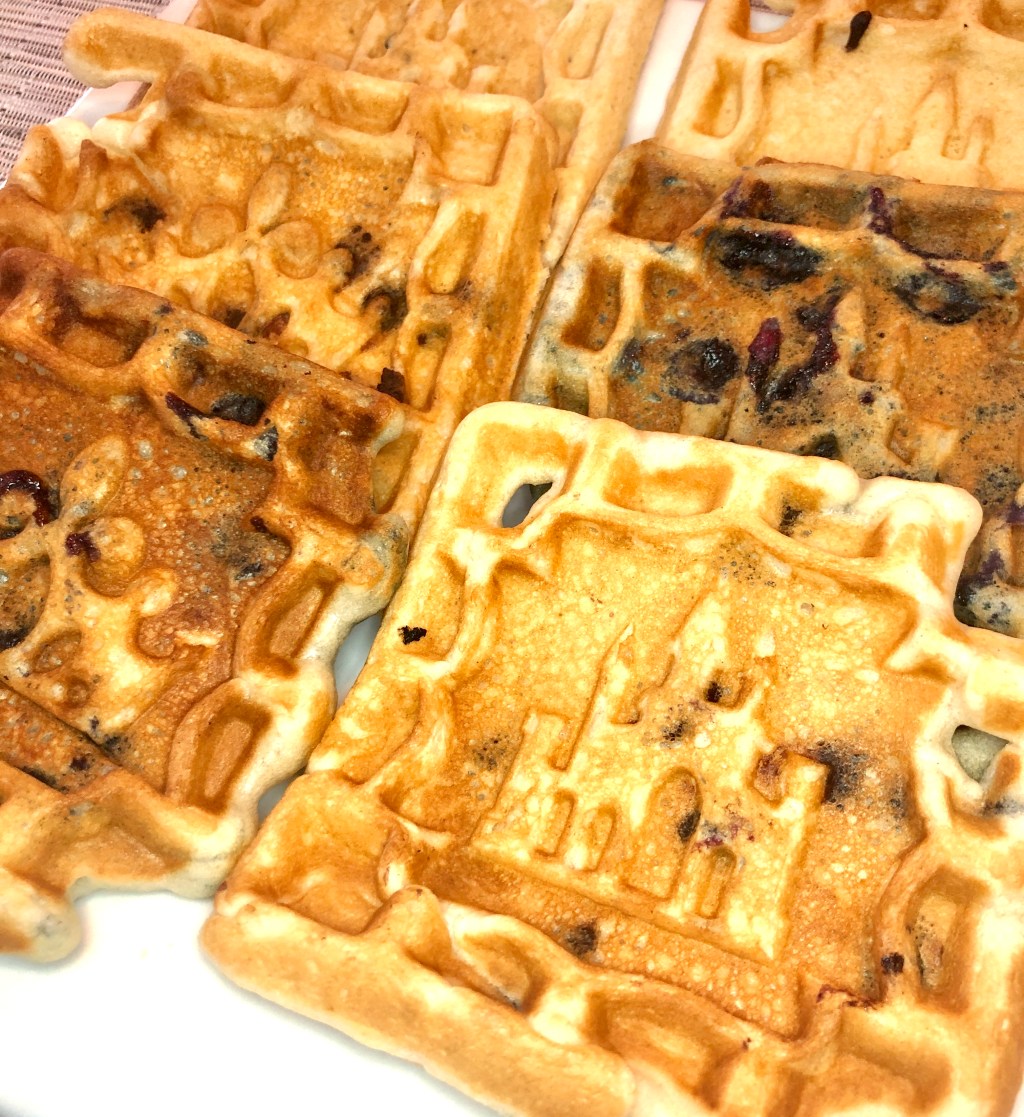
    I don’t know about you, but breakfast for dinner is a huge deal in our house. I’ll be honest, it’s my second favourite meal after brunch. Breakfast for dinner is a super-easy way to get all the food groups into my kiddos quickly and easily. It usually involves some kind of egg (scrambled, fried, or omelette style) and waffles. Keep reading for some of my favourite mom-hacks and flavour combinations. Now, I am not here to preach to you about no sugar, all-natural, gluten-free food. In our house, we believe in everything in moderation. If you are a mom who makes everything from scratch that is all-natural and without any preservatives or sugar, give me your address and I’ll send you your medal. That is not who I am.

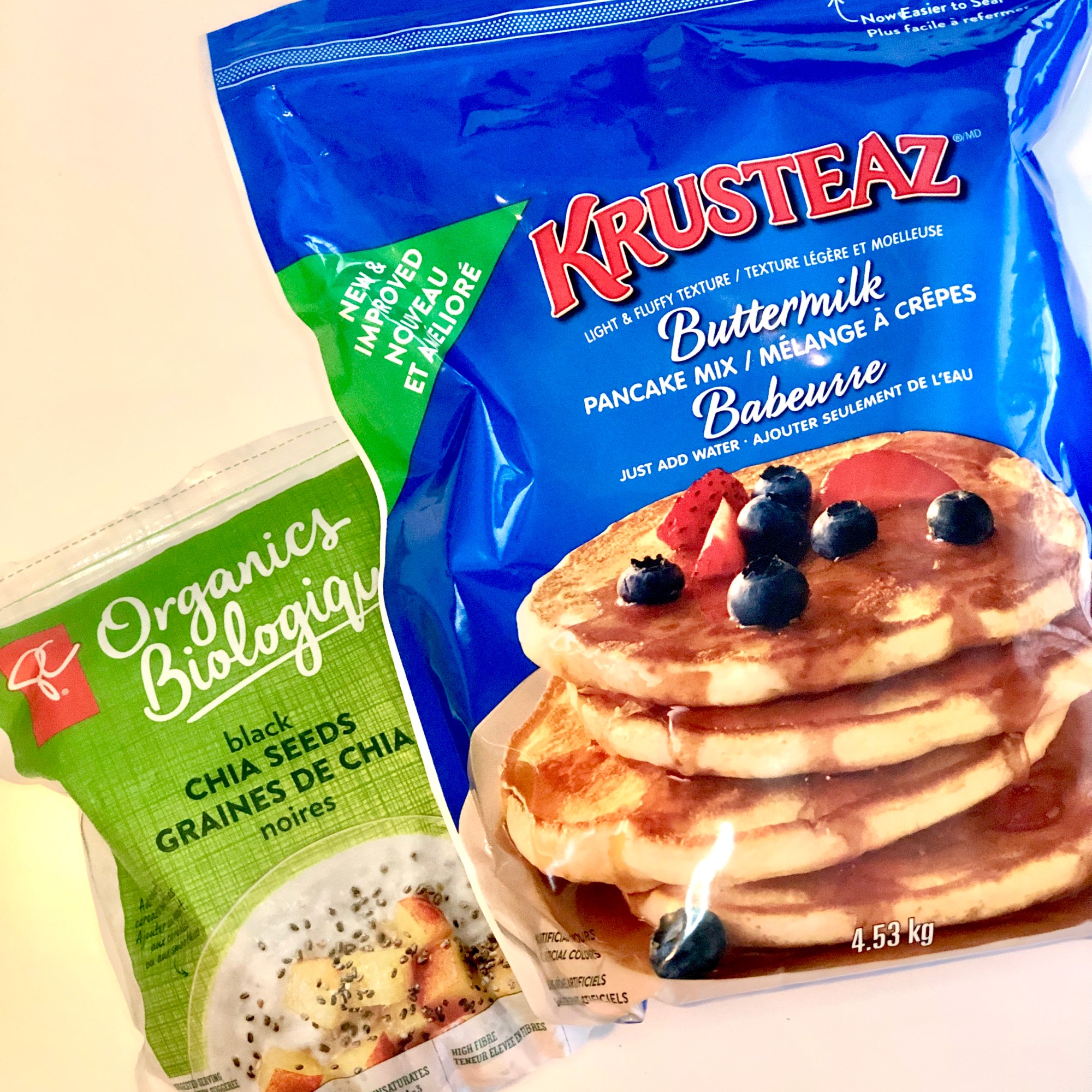
    Waffles are not an everyday meal, but we do enjoy them. So when I make the kids waffles, I use pancake mix. My preference is the mix where you add an egg and milk, but I don’t always find it that convenient because you need to make a set amount. These days, we are loving the Krusteaz mix from Costco (or found here https://amzn.to/2V1y5WK).

    MOM HACK #1: I do try to make the waffles a bit healthier by adding a teaspoon of ground flax and/or chia. These ingredients help bump up the fibre and omegas without messing with the taste. Don’t forget to keep both of those items in your fridge for maximum freshness.

    MOM HACK #2: This is a great place to throw in some fruit for your picky eaters. Frozen blueberries work perfectly here.

    I won’t include a specific recipe here, because the best thing to do is to play around with the flavour combinations. Simply make the waffles according to the instructions on your box, and throw in some extras. Just make sure to grease your waffle iron well, especially if you are using cheese. My kids love savoury waffles, too! Here are some things we are loving these days:

    • Mini chocolate chips (a couple tablespoons only, a little goes a long way)
    • Pomegranate seeds and slivered almonds
    • Cinnamon and vanilla
    • Frozen blueberries or raspberries
    • Shredded mozzarella cheese and garlic powder
    • Everything seasoning (you won’t regret this one, trust me!)
    • Shredded cheddar cheese and pickled jalapenos

    MOM HACK #3: If you own a waffle iron like mine, the plates do not come off, which makes it super fun to clean. When I am done cooking, turn the iron back on and put a wet paper towel inside for a few seconds. Make sure the paper towel is pretty wet but not dripping, and do NOT walk away from the iron. The wet towel will create some steam and help lift the sticky bits off the griddle (or in my case, the top of the castle), making it easier to clean.

    As with other recipes, I love trying new food combinations. J is a super foodie, and loves to come up with her own, too. If you make this recipe, please feel free to tag me on Instagram, or comment here with your favourite flavours for us to try!

    And don’t forget – waffle mix, like everything else in life, is OKAY in moderation!

    This is life. Love, Mom.

  • Love Handles And Other Things We Hold On To

    Love Handles And Other Things We Hold On To

    People like to talk about growth, and how life-changing new experiences can be. We preach the goodness of looking towards the future, and how the past is behind us. We all want to think that we value these learning experiences, and welcome them. Don’t get me wrong- these are all important ideas to value, and in many cases it is easier to look forward than back. But when it comes down to it, change is hard for most people, especially when that change is related to our most valuable possession – our bodies. We hold a picture in our minds of how we should look; based either on an idea or a past season of life. For many, this correlates to a size, weight, measurement, or another number. It doesn’t necessarily mean that we all want to be smaller, thinner or weigh less. It could mean we want to bulk up, gain muscle, or weigh more. But for whatever reason, how we look does not line up with how we feel about ourselves. There is often a nagging feeling that “if only” we could change something, or go back to the way we once were, we would be happier.

    There is a special place in this hell of a landscape for mothers. Body image is a dangerous term. I would argue that for many, it may be one of the most emotionally charged terms in the English language. It is tied so tightly to so much more than just how we see ourselves. The mental ramifications of studying our bodies can be damning. The obsessing, seeing flaws, and urge to fix things is a slippery slope. As mothers in particular, society does us no favours. The same body that is praised for growing and bringing life into the world is quickly frowned upon for not “bouncing back” fast enough. We attach descriptives like glowing, radiant and healthy to pregnant bodies, and then turn around and call those same, postpartum bodies tired, flabby, and untoned.

    The moment mothers give birth, the race is on to erase the stretch marks, tighten the love handles, and tone the core. Celebrities who leave the hospital looking runway-ready, or grace the cover of magazines in bikinis a mere months after giving birth, do us all a huge disservice. We look to how our bodies were before babies and yearn for those back, as if all it took was a time machine. We don’t relish the beauty and miracle that same body has given us.

    In the spirit of transparency, I am equally guilty of this. I often think back to my pre-pregnancy body, and equate it with a number on the scale and a size of jeans. For a long time, I hid my stretch marks, even from myself. The body that grew two humans was not what I wanted it to be. Why is it I was able to carry two wonderful, healthy babies to term, and still judge the body that made it possible? Even to this day, I struggle with loving my outer shell. I have worn one-piece bathing suits since I was pregnant nine years ago, only bought a bikini last year… and I still don’t feel 100% confident in it. It is a journey and gets easier or harder depending on the season I am in. Anyone who says that social media, advertisements and popular culture have zero effect on them is in denial. Those people may have a stronger inner voice than others, but the messages (subliminal and overt) are constantly thrown at us. I have recently begun following several body-conscious influencers on Instagram to help inform my mindset. If you are looking for some, Sarah Nicole Landry (aka The Bird’s Papaya) is a great start. I feel fortunate that these women are making their voices heard, and have been embraced by others. There hasn’t always been a place for these stories, but they are slowly becoming louder and louder.

    It is a unique form of torture we keep only for our deepest, darkest moments.

    So why do we hold on to these ideals? These past images of ourselves? Keep clothes in our closet so we can wear them again eventually? Or perseverate on unrealistic goals that will somehow determine our self-worth? It is a unique form of torture we keep only for our deepest, darkest moments. Why is it so easy to preach self-love and self-care, but so difficult to exercise them? We tell each other to treat ourselves with grace and patience, yet it is so difficult to take our own advice. Society simultaneously tells women to be perfect versions of themselves, but also to take care of themselves and not worry about what others think. For my part, I have to commend Hubby for having my back. He often tells me to shake off the negative self-thoughts. There is a stark contrast between these polarizing ideas, and it is so difficult to meet somewhere in the middle. It would be so much easier to just say “screw it” and live for ourselves and not for others. It is just easier said than done.

    Having a daughter has changed my outlook, though. With diet culture and social media barbies running rampant, I am acutely aware of the messages she is receiving. I know that as she grows, she will [continue to] be bombarded with print and television media ideas of what she should look like. I just don’t want those messages to come from me, too. I have always been conscious of not commenting on my weight in front of her. That is a private conversation I have inside my head. Those are the demons that I battle on my own time. J sees me exercising and hears me talking about eating healthy, but we always frame the conversation about how it is to keep our minds healthy and feel good about ourselves. We talk about makeup, and how I wear it for myself, and not to look beautiful for others. I stress the importance of doing things for ourselves to boost our positive vibrations, and not as a result of others’ judgements. The other day she commented on my stretch marks, and I told her we should come up with a magic word for them because they magically appeared when she was born. Did I believe it when I said it? Honestly not even for a hot second. But I wanted to try to be positive about it. I want her to love her body, and talk positively about herself, even if I am still learning how to do so. Of all the things I want to pass on to my daughter, negative body image is definitely not one of them.

    This is life. Love, Mom.